

Blog
ETP with MBBR Technology in Mumbai



 Enquire Now
ETP with MBBR Technology in Mumbai | Aquacaresee Pvt. Ltd.
Mumbai’s industrial belt generates effluent that varies sharply between shifts, seasons, and production cycles. A generic plant rarely keeps pace with those swings. ETP with MBBR Technology in Mumbai gives plant operators a biological process that absorbs load shocks without losing treatment stability. Aquacaresee Pvt. Ltd. builds these systems around measured site data rather than catalogue assumptions.
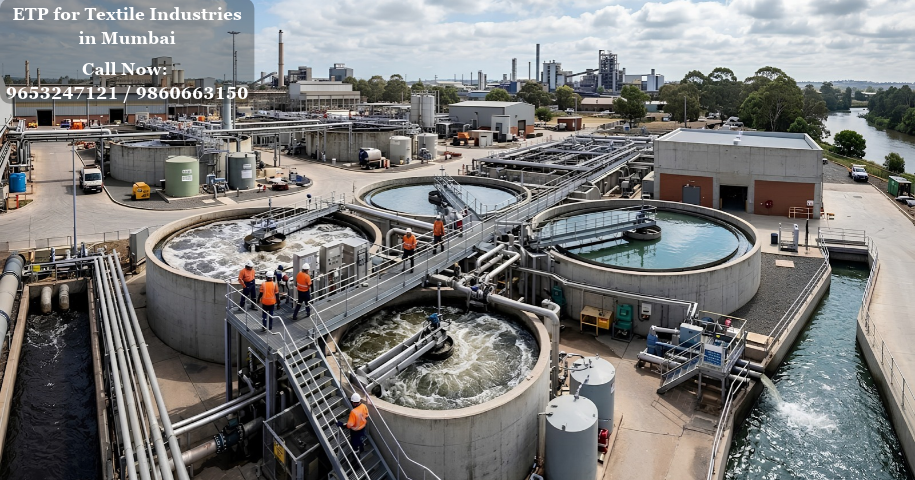
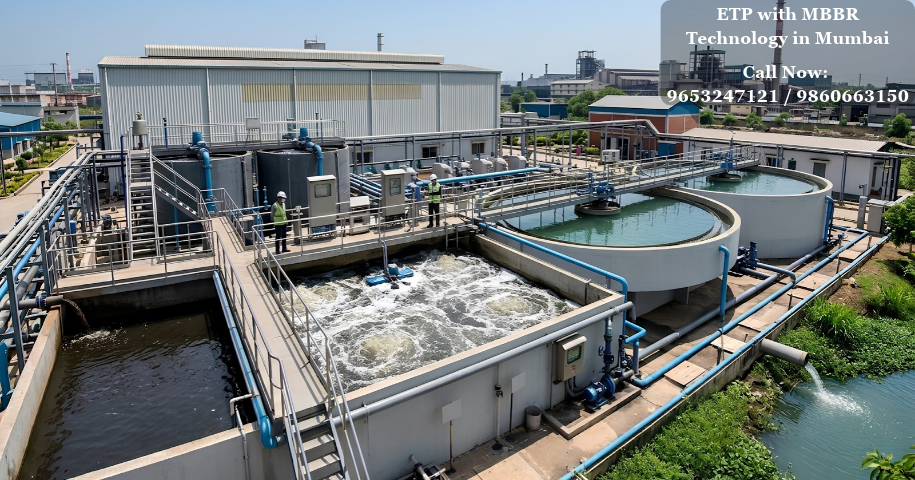
The moving bed biofilm reactor uses small floating carriers that host a dense bacterial film. Because that biomass stays inside the tank while water passes through, the system tolerates higher organic loads than a conventional suspended-growth unit. Industrial wastewater treatment specialists favour this configuration wherever footprint is tight and effluent strength fluctuates.
Call Now: 9653247121
Website: https://aquacaresee.com
About Us
Aquacaresee Pvt. Ltd. has designed and delivered effluent treatment infrastructure since 2006, and today works from a Pune headquarters with a service footprint that reaches Mumbai, Jaipur, and overseas installations. Its engineering team treats every MBBR project as a fresh problem to solve, because no two effluent streams behave alike.
- MBBR-based ETP design, fabrication, and full commissioning
- Capacity planning based on actual COD, BOD, and flow readings
- Bio-carrier selection matched to organic loading and aeration budget
- Retrofit of MBBR media into existing tanks to raise throughput
- Operator training, annual maintenance, and round-the-clock response
Facilities comparing suppliers for ETP with MBBR Technology in Mumbai usually want three things: predictable outlet quality, low operator burden, and a partner who answers after handover. Aquacaresee structures each project around those expectations, and the effluent treatment plant range covers everything from compact packaged units to multi-stage municipal-scale systems.
Inside the MBBR Process: What Happens to Effluent at Each Step
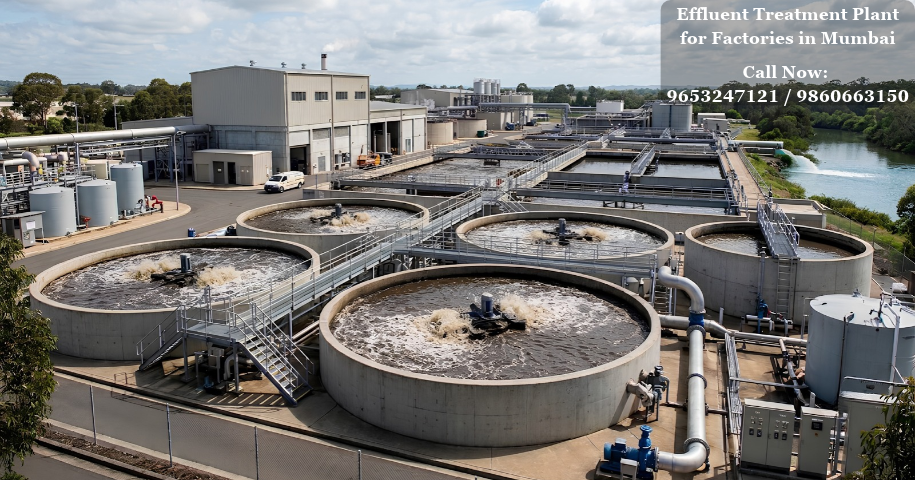
An MBBR effluent treatment plant is not a single vessel but a sequence of chambers, each with a defined job. Effluent enters at one end and leaves at the other having passed through screening, equalisation, biological digestion, and clarification. Understanding that sequence helps owners spot which stage needs attention when outlet readings drift.
The MBBR stage itself relies on plastic carriers with a protected internal surface area. Bacteria colonise that surface and stay put while water flows past, so the reactor keeps working even when inflow strength jumps unexpectedly. Compared with a conventional activated sludge tank, the same volume holds far more active biomass.
Stages you will find in a typical MBBR-based ETP:
- Bar screening and grit removal to protect downstream equipment
- Collection sump with equalisation to flatten peak flows
- Oil and grease trap ahead of biological treatment
- Anoxic chamber for denitrification where nitrogen limits apply
- Aerobic MBBR reactor with submerged bio-media and diffused aeration
- Secondary settling tank or tube settler for biomass separation
- Sludge holding and dewatering for solids management
- Disinfection or polishing before reuse or discharge
Which of these stages actually get built depends on the effluent analysis, the consent conditions, and how the recovered water will be used. High-strength chemical effluent may need additional tertiary treatment, while a canteen or laundry stream might clear with a simpler train. The engineering principles behind industrial wastewater treatment remain the same; the configuration does not.
This is precisely why the phrase ETP with MBBR Technology in Mumbai cannot be treated as an off-the-shelf purchase. Two factories on the same MIDC estate can need very different reactor volumes, media fill fractions, and aeration blowers. Guessing those numbers is expensive; measuring them is not.
Pressure Points That Make MBBR the Right Fit for Mumbai Plants
Land inside Mumbai’s industrial zones is scarce and costly, which immediately rules out sprawling lagoon-based treatment. MBBR packs a high concentration of active biomass into a compact tank, so a plant can meet consent limits in a fraction of the area a conventional system would demand. That single advantage often decides the technology choice before any other factor is weighed.
Where an MBBR-based ETP earns its keep in this city:
- Shock loads from batch manufacturing no longer upset the biology
- Existing tankage can be upgraded by adding media, not concrete
- Lower sludge yield trims dewatering and disposal costs
- Modular trains scale up as production expands
- Outlets stay within MPCB consent limits across seasonal swings
- Recovered water can feed cooling towers, flushing, or landscaping
- Fewer moving parts means fewer breakdowns and simpler maintenance
Water tariffs in Mumbai climb steadily, and groundwater extraction faces tighter scrutiny each year. An ETP that produces reusable water therefore pays for itself in ways a discharge-only system never can. Every cubic metre recovered is a cubic metre not purchased, and that arithmetic matters more to plant managers than any brochure claim.
MBBR Effluent Plants Built for Different Industries
Effluent composition shifts dramatically from one sector to another, and reactor design has to follow that reality rather than a fixed template.
1. Chemical and Pharmaceutical Plants
Solvent-laden and acidic streams demand pre-neutralisation before biology can work. Media selection and hydraulic retention time are tuned so the biofilm survives toxic spikes without a full reseed.
2. Food, Dairy, and Beverage Units
High BOD from wash water and product residue responds well to MBBR biology, provided fats are trapped upstream. Recovered water frequently returns to floor washing and utility duties.
3. Textile and Dyeing Operations
Colour bodies and dye carriers complicate biological treatment, so chemical oxidation or adsorption often precedes the MBBR chamber. Sequencing the stages correctly keeps outlet colour and COD within limits.
4. Hospitals and Hospitality Establishments
Laundry and kitchen streams dominate here, and odour control matters as much as outlet quality. Covered tanks and controlled aeration keep the plant unobtrusive on a busy campus.
5. Municipal and Township Facilities
How an MBBR Effluent Plant Runs Day to Day
Daily operation revolves around a short list of checks, and each one tells the operator something specific about plant health.
- Inlet monitoring: Flow, pH, and COD are logged so any loading shift is caught early.
- Aeration control: Dissolved oxygen is held in the right band, since blowers consume the largest share of power.
- Media inspection: Carrier fill fraction and biofilm condition are checked for clogging or loss.
- Sludge handling: Excess solids are drawn off and dewatered on a fixed schedule.
- Outlet testing: Treated water is sampled against consent parameters before discharge or reuse.
- Consumables review: Dosing chemicals, filter media, and spares are replenished before they run short.
What a Specialist MBBR Partner Brings to Your Project
Anyone can quote a tank size. What separates a working plant from a costly experiment is the engineering behind the numbers, and that shows up in how the system behaves two years after commissioning.
Reactor Design Tied to Your Data
Volume, media fill, aeration intensity, and retention time are all derived from your effluent analysis, not a standard chart. That is how a plant ends up correctly sized instead of merely large enough.
One Accountable Team From Drawing to Handover
Design, fabrication, erection, piping, electricals, and commissioning sit with a single vendor. When something needs adjusting, there is no finger-pointing between contractors.
Components Chosen for Service Life
Blowers, diffusers, screens, and carrier media are specified for the duty they will actually see. Cheap substitutes fail early and cost more in downtime than they saved at purchase.
Support That Continues After Switch-On
Annual maintenance contracts, operator refresher training, and remote troubleshooting guidance keep outlet quality steady long after the project team has moved on.
Lower Running Costs Over the Asset Life
Right-sized aeration and media fill reduce power draw, while recovered water displaces purchased supply. Both savings compound year after year.
Single-Point ETP Delivery for Mumbai Industrial Clients
Where an owner wants one contract covering the whole plant, a turnkey ETP with MBBR Technology in Mumbai arrangement removes the coordination burden.
Scope covered under a single agreement:
- Walkthrough and effluent sampling at your site
- Treatability study and process selection
- Reactor sizing and media specification
- P&ID preparation and layout drawings
- Fabrication of tanks, skids, and piping
- Transport and site delivery
- Mechanical and electrical erection
- Trial runs and performance validation
- Operator handover and documentation
- Post-commissioning maintenance cover
Clients who already own tanks can also choose a retrofit path, where MBBR media and aeration are added to existing civil structures to raise capacity without new construction.
Why Aquacaresee Stands Out for MBBR Effluent Projects in Mumbai
Two decades in the field have taught the team which shortcuts cause failures and which details actually protect outlet quality.
What clients consistently value:
- Trading since 2006 with a continuous project record
- In-house process design rather than outsourced engineering
- Direct manufacturing control over fabrication quality
- MBBR experience across ETP, STP, and ZLD configurations
- Commissioning crews familiar with live factory conditions
- Maintenance contracts with defined response timelines
- Support for consent documentation and monitoring reports
- References across pharma, food, textile, and hospitality sectors
The company operates from Pune with active coverage in Mumbai, Jaipur, and international locations. Prospective clients can review past work through the firm’s Instagram project updates or connect through the official Facebook page.
E-E-A-T (Experience, Expertise, Authoritativeness, Trustworthiness)
Experience
Operating continuously since 2006, the firm has commissioned effluent and water treatment plants across Maharashtra and beyond. That project history includes retrofit jobs where existing civil structures had to be adapted rather than replaced.
Expertise
The technical team covers biofilm process design, carrier selection, aeration sizing, and sludge management alongside conventional physico-chemical treatment. This breadth allows a single vendor to handle hybrid trains where MBBR follows chemical or membrane stages.
Authoritativeness
Plants supplied by the company operate in pharmaceutical, food processing, textile, healthcare, and municipal settings, each with its own consent regime. Meeting those varied regulatory expectations consistently is what builds standing in the sector.
Trustworthiness
Documentation, calibration records, and maintenance logs are handed over in usable form rather than buried in a file. Clients get straightforward answers on capacity limits and running costs before signing, not after.
Frequently Asked Questions (FAQs)
Q1. How is MBBR technology different from conventional activated sludge?
Ans: In MBBR the bacteria grow on floating plastic carriers instead of loose flocs, so the reactor retains far more active biomass in the same volume. This makes the process more tolerant of load swings and reduces the settling area needed downstream.
Q2. Which company supplies the Best ETP with MBBR Technology in Mumbai?
Ans: Aquacaresee Pvt. Ltd. has been building effluent treatment plants since 2006 and offers MBBR-based ETPs with in-house design, fabrication, commissioning, and maintenance. The team can be reached through the contact page for a site-specific assessment.
Q3. Can an existing ETP be upgraded to MBBR instead of building new?
Ans: Yes, in most cases. If the civil tanks are structurally sound and have adequate depth, media and aeration can be added to convert them into MBBR reactors. A hydraulic check confirms whether pumps and piping need upgrading at the same time.
Q4. What effluent parameters decide the MBBR reactor size?
Ans: Inflow volume, COD and BOD concentration, suspended solids, oil and grease content, and the target outlet quality all feed into sizing. Temperature and the presence of inhibitory chemicals are also considered before media fill and aeration rates are fixed.
Q5. How much maintenance does an MBBR effluent plant need?
Ans: Routine work is limited to blower checks, media inspection, sludge withdrawal, and periodic outlet testing. Because there is no return-sludge pumping or clarifier scraper in the biological loop, day-to-day attention is lighter than with conventional systems.
Contact Us
Phone:+ 91 – 96532 47121 / + 91 – 98606 63150
Email: marketing@aquacaresee.com
Website: www.aquacaresee.com
Add: 8th floor office No.810, KAMDHENU 23 WEST, TTC Industrial Area, MIDC Industrial Area, Pawne, Navi Mumbai, Maharashtra 400705, Navi Mumbai, Maharashtra 400705.
Add: Office No. 204, Aquacaresee Pvt. Ltd.; 205; and 206, Old Mumbai-Pune Hwy, opp. Hotel Silver Seven, Akurdi Gaothan, Vivek Nagar, Akurdi, Pimpri-Chinchwad, Pune, Maharashtra 411035.
Add: Hanuman Vatika, F/1 – 56-A/3, I, opposite Golden Dags Resorts, near 200 Feet Bypass Road, Hanuman Vatika-1, Heerapura, Heerawala, Jaipur, Rajasthan 302024.
Conclusion
Choosing the right ETP with MBBR Technology in Mumbai comes down to matching reactor design to your actual effluent, not to a generic specification sheet. Get that match right and the plant runs quietly for years; get it wrong and every monsoon brings a fresh compliance headache.
Aquacaresee handles the full arc, from sampling and treatability work through fabrication, erection, commissioning, and annual maintenance. Plants delivered by the team can be reviewed on the company’s YouTube channel, and site visits can be arranged through the contact page. For a plant that has to work in Mumbai’s conditions, that combination of design depth and local support matters.
Call Now: 9653247121
“Don’t forget to share this post!”