

Blog
ETP for Textile Industries in Mumbai



 Enquire Now
ETP for Textile Industries in Mumbai | Aquacaresee Pvt. Ltd.
Mumbai’s textile processing clusters generate some of the most complex effluent streams in India. Aquacaresee Pvt. Ltd. engineers dependable ETP for Textile Industries in Mumbai built around precise characterisation and practical plant design. Our team has delivered treatment infrastructure since 2006, helping dyeing, printing, and finishing units meet pollution board norms. Every engagement begins with a full effluent audit before equipment selection is finalised. Clients receive a treatment partner who understands both consent conditions and day-to-day plant realities. The outcome is infrastructure that keeps performing across the full operational lifecycle.
Our work covers effluent treatment plants, sewage treatment systems, and complete water recovery trains for textile mills, processing houses, and integrated garment facilities. Aquacaresee also manages turnkey delivery, consultancy, erection, commissioning, and AMC scopes. Operations reach Mumbai, Navi Mumbai, Pune, and surrounding industrial belts. Sectors served include textile, pharmaceutical, chemical, food, and municipal applications.
Call Now: 9653247121
Website: https://aquacaresee.com
About Us
Aquacaresee Pvt. Ltd. commenced operations in 2006 and has refined its textile effluent expertise across nearly two decades of plant delivery. The company handles design, fabrication, supply, erection, commissioning, consultancy, AMC, and O&M under a single accountable structure.
From its Pune headquarters and Navi Mumbai office, the Aquacaresee team supports dyeing units, processing houses, and municipal clients throughout Mumbai and the wider MMR region.
Because engineering, manufacturing, project delivery, and service support sit within one organisation, each textile ETP becomes a lifecycle commitment rather than a one-time equipment sale.
Instead of viewing textile water management as isolated equipment, Aquacaresee evaluates the complete effluent treatment requirement.
This covers:
- Textile effluent assessment
- Dye-house flow evaluation
- Wastewater characterisation
- Process selection and design
- Fabrication and supply
- Installation and commissioning
- AMC and O&M support
For textile processors seeking a long-lasting treatment partner rather than a one-off equipment supplier, this end-to-end approach delivers genuine practical value.
What Sets Our Textile Effluent Approach Apart
A textile effluent treatment system is a purpose-built treatment train designed to maximise water recovery and reduce or remove the discharge of untreated dye-house effluent.
Unlike traditional treatment systems that may treat sewage before controlled discharge, a textile ETP concentrates on recovering reusable water and concentrating the remaining dyes, salts, and dissolved contaminants into a manageable residue.
A well-engineered treatment system may integrate multiple technologies depending on the characteristics of the dye-house wastewater. These can include pretreatment, coagulation, flocculation, clarification, filtration, membrane processes, Reverse Osmosis (RO), Ultrafiltration (UF), evaporation, and other specialised treatment stages.
The exact configuration should not be assumed to be identical for every mill. Effluent composition, flow rate, Total Dissolved Solids (TDS), Chemical Oxygen Demand (COD), Biological Oxygen Demand (BOD), colour intensity, hardness, scaling potential, temperature, dye chemistry, water-reuse requirements, and site conditions all influence the final plant design.
Therefore, choosing an experienced ETP for Textile Industries in Mumbai provider is important when planning a water recycling project.
Why Mumbai Textile Units Need Reliable Effluent Treatment
Mumbai and its surrounding industrial corridor host dyeing houses, printing units, garment factories, processing facilities, and other water-intensive textile operations.
Many of these facilities rely on dependable water supplies for dyeing, washing, printing, cooling, utilities, and other processes. Effluent generated from these activities may contain dissolved salts, suspended solids, organic dyes, chemicals, oils, and other substances that require specialised treatment.
A conventional treatment approach may not always address the complete water-recovery requirements of a textile processing facility.
This is where a ETP for Textile Industries in Mumbai partner can help facilities evaluate advanced treatment and recycling options.
A modern treatment system can support textile facilities by helping them:
- Increase wastewater recycling and reuse
- Reduce dependence on freshwater
- Minimize liquid wastewater discharge
- Improve water-management efficiency
- Support environmental sustainability objectives
- Recover treated water for suitable reuse applications
- Manage concentrated dye-house streams
- Improve long-term wastewater management
- Support regulatory and environmental compliance requirements
- Develop a more circular approach to textile water use
The objective is not simply to install equipment. A successful treatment project requires proper wastewater characterisation, process engineering, equipment selection, plant integration, commissioning, and ongoing operational support.
Sector-Specific Textile Treatment Solutions We Deliver
Textile and garment facilities generate effluent from dyeing, printing, washing, and sanitation processes. Aquacaresee provides customised treatment solutions based on effluent characteristics, helping with water recycling, recovery, sludge management, and reduced effluent discharge.
Dye-House Effluent Treatment Systems
Dyeing and printing units may generate complex effluent containing colour, salts, organic matter, and dye chemicals. Aquacaresee designs suitable treatment solutions using technologies such as coagulation, biological treatment, filtration, and disinfection, depending on requirements.
Effluent Plants for Processing and Finishing Units
Processing houses, finishing units, and integrated mills consume water for fabric preparation, cleaning, and other operations. Customised treatment and water reclamation systems can support water recycling, reuse, and improved water efficiency.
Recycling Systems for Common Effluent and Municipal Use
Common effluent treatment and municipal applications can benefit from treatment and recycling solutions. Aquacaresee evaluates effluent quality, flow, and reuse requirements to develop suitable treatment systems.
Municipal and Commercial Treatment Infrastructure
Municipal projects require careful planning for effluent flow, water quality, land, energy, sludge, and reuse requirements. Aquacaresee provides consultancy, turnkey projects, and customised water and treatment solutions for suitable municipal applications.
How Modern Textile Effluent Treatment Systems Operate
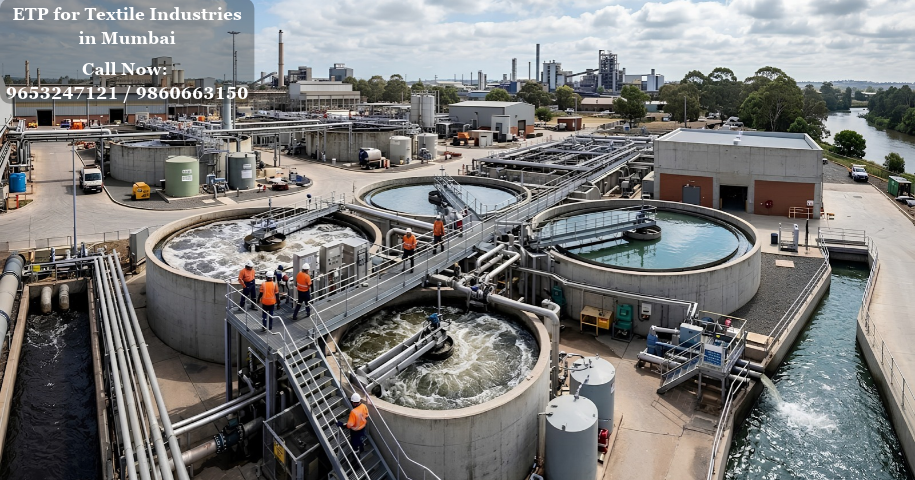
A treatment plant processes influent through multiple stages to recover water and minimize liquid discharge. The exact process depends on effluent quality, flow, and recovery requirements.
1. Collection and Flow Equalization
Effluent is collected and equalised to maintain consistent flow and composition.
2. Preliminary Treatment
Processes such as screening, pH correction, coagulation, flocculation, clarification, filtration, and softening remove contaminants and protect downstream systems.
3. Biological Processing
Technologies such as MBBR, SBR, and MBR help degrade organic matter while separating treated water from biomass.
4. Advanced Polishing
Advanced stages such as filtration, disinfection, and membrane systems further polish the treated water when required.
5. Sludge Management
Further concentration can convert separated sludge and solids into a manageable form.
6. Water Reclamation and Reuse
Recovered water can be reused for suitable applications such as cooling, utilities, washing, landscaping, and other non-potable purposes.
Installation and Commissioning of Textile ETP Systems in Mumbai
Installation quality can directly influence plant performance.
Even a technically advanced treatment system requires correct installation, piping, electrical connections, instrumentation, equipment alignment, and process integration.
Aquacaresee provides erection and commissioning services for textile and effluent treatment projects.
During commissioning, the system can be evaluated for:
- Hydraulic performance
- Equipment operation
- Pump performance
- Instrumentation
- Automation
- Process sequence
- Water quality
- Biological process operation
- Disinfection performance
- Overall system integration
The exact commissioning procedure depends on the technology and project specifications.
AMC and O&M Services for Textile Effluent Treatment Systems
Installing a treatment plant is only the beginning of long-term water management.
Regular maintenance is essential for protecting plant performance and equipment life.
Aquacaresee provides AMC and Operation & Process Maintenance support as part of its textile and effluent treatment service capabilities.
Maintenance programs may include:
- Preventive maintenance
- Equipment inspection
- Pump maintenance
- Valve inspection
- Aeration system monitoring
- Filter maintenance
- Instrumentation checks
- Electrical system inspection
- Cleaning procedures
- Process monitoring
- Troubleshooting
- Performance evaluation
The precise AMC scope should be defined according to the equipment, operating conditions, and customer requirements.
Sustainability and the Future of Textile Water Management
Water conservation is becoming increasingly important for textile industries.
Textile processors are moving beyond traditional effluent disposal models toward water recovery, reuse, resource optimization, and circular water-management strategies.
A textile effluent treatment system can form an important part of this approach.
Instead of viewing effluent solely as a waste stream, textile processors can evaluate opportunities to recover water and reduce liquid discharge.
The long-term objective is to create more efficient textile water cycles.
This can help textile industries:
- Reduce freshwater dependence
- Improve wastewater recovery
- Strengthen sustainability initiatives
- Reduce environmental impact
- Improve water-use efficiency
- Prepare for future water-management challenges
However, sustainability should always be balanced with technical feasibility, energy consumption, operating costs, and actual effluent characteristics.
A professionally engineered system should optimize the overall lifecycle rather than focusing only on maximum recovery.
Experience
Since 2006, Aquacaresee has accumulated more than two decades of hands-on textile effluent and wastewater treatment delivery across industrial sectors.
Expertise
Specialised in textile effluent treatment plants, ETP, STP, turnkey projects, installation, commissioning, AMC, and O&M services.
Authoritativeness
Aquacaresee serves diverse textile applications with customised effluent and wastewater treatment solutions.
Trustworthiness
Frequently Asked Questions (FAQ)
Q1. What is included in a ETP for Textile Industries in Mumbai service?
Ans: A complete service covers system design, equipment supply, installation, commissioning, and ongoing treatment performance support for the facility.
Q2. Can Aquacaresee handle projects in Mumbai?
Ans: Absolutely. Aquacaresee Pvt. Ltd. has operated since 2006 and provides textile effluent and wastewater treatment solutions throughout Mumbai and adjoining industrial regions.
Q3. Which textile sectors benefit from ETP plants?
Ans: ETP plants serve dyeing units, printing houses, garment factories, processing mills, textile parks, common effluent treatment plants, and many other textile-related sectors.
Q4. What core technologies feature in a modern textile effluent treatment plant?
Ans: Depending on project needs, systems may incorporate coagulation, flocculation, MBBR, SBR, MBR, filtration, disinfection, and other advanced treatment stages.
Q5. Does every textile facility require the same ETP configuration?
Ans: No. The requirement depends on effluent characteristics, recovery targets, and the selected treatment process.
Contact Us
Looking for a dependable ETP for Textile Industries in Mumbai? Contact Aquacaresee Pvt. Ltd. for customised effluent treatment and wastewater treatment solutions.
- Phone:+ 91 – 96532 47121 / + 91 – 98606 63150
- Email: marketing@aquacaresee.com
- Website: www.aquacaresee.com
- Add: 8th floor office No.810, KAMDHENU 23 WEST, TTC Industrial Area, MIDC Industrial Area, Pawne, Navi Mumbai, Maharashtra 400705, Navi Mumbai, Maharashtra 400705.
- Add: Office No. 204, Aquacaresee Pvt. Ltd.; 205; and 206, Old Mumbai-Pune Hwy, opp. Hotel Silver Seven, Akurdi Gaothan, Vivek Nagar, Akurdi, Pimpri-Chinchwad, Pune, Maharashtra 411035.
- Add: Hanuman Vatika, F/1 – 56-A/3, I, opposite Golden Dags Resorts, near 200 Feet Bypass Road, Hanuman Vatika-1, Heerapura, Heerawala, Jaipur, Rajasthan 302024.
Conclusion
Choosing the right ETP for Textile Industries in Mumbai matters for textile processors seeking efficient treatment, water recovery, and sustainable liquid-discharge management. With 20+ years of experience since 2006, Aquacaresee Pvt. Ltd. delivers customised effluent treatment and wastewater treatment solutions for dyeing houses, printing units, garment factories, textile parks, municipalities, and other textile applications.
From system design and manufacturing to installation, commissioning, AMC, and O&M, Aquacaresee offers end-to-end support based on each project’s effluent characteristics and operational requirements. If you are planning a new treatment plant or upgrading your existing wastewater treatment infrastructure, connect with Aquacaresee for a tailored solution.
Call Now: 9653247121
“Don’t forget to share this post!”