
Blog
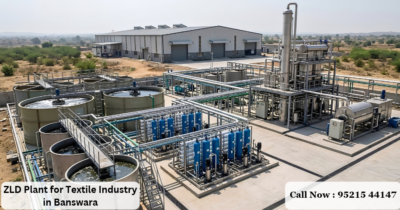
ZLD Plant for Textile Industry in Banswara

 95215 44147

 Enquire Now
ZLD Plant for Textile Industry in Banswara | Aquacaresee Pvt. Ltd.
Choosing a dependable ZLD Plant for Textile Industry in Banswara begins with knowing how much coloured, salt-heavy effluent your dyeing or processing unit produces daily. Aquacaresee Pvt. Ltd. has built water and effluent systems since 2006, shaping each design around the mill’s own wash and dye cycles.
Textile wastewater is rarely simple, because reactive dyes, caustic, soda ash and heavy salt dosing leave effluent with strong colour, high dissolved solids and swinging pH. Basic wastewater treatment alone often falls short of strict reuse and discharge expectations.
A zero liquid discharge approach links treatment, membranes and evaporation so most water returns to the process and the rest is handled as concentrated salts and sludge. Sharing your flow and laboratory data lets engineers outline a workable layout.
Call Now: 95215 44147 Website: https://aquacaresee.com
About Us
Founded in 2006, Aquacaresee Pvt. Ltd. designs and delivers water and wastewater systems for industrial, commercial and institutional clients, with textile effluent among the streams its engineers regularly evaluate.
What we offer textile clients:
- Textile ZLD Systems: Effluent recovery, brine concentration and salt handling for processing units.
- ETP and STP Plants: Treatment of dye-house effluent and domestic sewage.
- Water Treatment: WTP, RO and UF units for process and make-up water.
- Turnkey Delivery: Design, fabrication, supply, installation and commissioning.
- Service Support: Consultancy, AMC and O&M after handover.
Mills that want zero liquid discharge solutions for textile units also benefit from Aquacaresee’s ZLD plant manufacturing capability, which keeps fabrication, installation and commissioning closely coordinated.
How Zero Liquid Discharge Works in Textile Processing
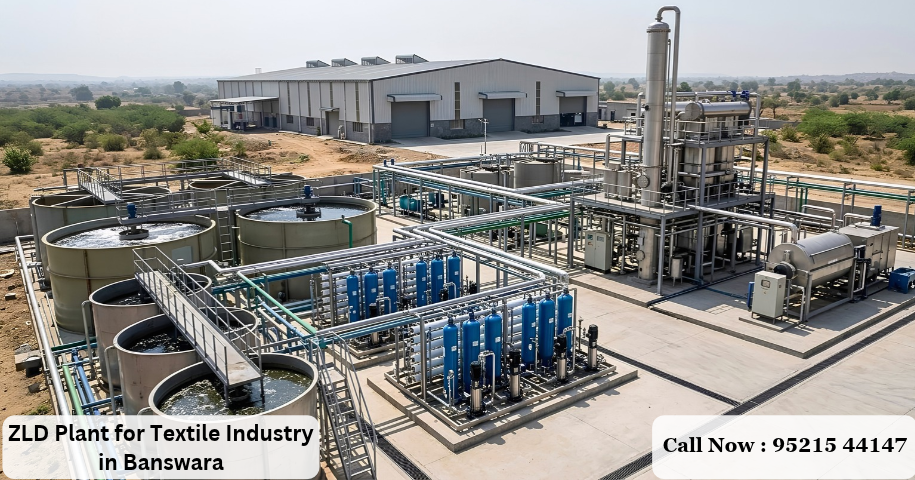
A textile ZLD plant takes effluent from dyeing, washing and finishing, cleans it in stages and sends the recovered water back to the mill.
What cannot be recycled is reduced to a small, salt-heavy stream that is evaporated and solidified rather than discharged as liquid.
Stages commonly combined in a textile ZLD train:
- Equalisation, pH correction and chemical clarification
- Biological treatment and tertiary filtration
- Ultrafiltration (UF) followed by reverse osmosis (RO) for desalting
- Evaporators and crystallisers for the reject stream
How each stage is sized depends on dye chemistry, fibre type, salt load and the water quality your wet-processing line can accept back.
Because RO reject still carries colour and dissolved salts, a dependable textile ZLD system must include a concentration step; membranes alone cannot deliver zero liquid discharge.
Reasons Banswara Textile Units Are Moving Toward ZLD
Banswara has a long-standing textile presence, and spinning, weaving and wet-processing activity draws heavily on freshwater while producing effluent rich in salts and colour. Tighter pollution control expectations and water security concerns push many units to consider recovery and reuse. The right plant size follows measured flows, peak loads, shift patterns and planned expansion rather than assumption.
Practical Gains for Mills and Processors
- Water Reuse: Recovered water can return to washing, cooling and other suitable process steps.
- Lower Liquid Release: Concentrate is solidified, so routine liquid discharge from the defined system boundary is avoided.
- Single Treatment Chain: Treatment, membranes, evaporation and solids handling are planned as one system.
- Compliance Readiness: Supports adherence to applicable pollution control requirements where ZLD is mandated.
- Reduced Freshwater Draw: Savings depend on the recovery achieved and the operating cost incurred.
Choosing the right textile ZLD plant means weighing effluent quality, recovery goals, steam and power use, chemical consumption, upkeep and future growth. A site-specific design keeps the plant aligned with both production and environmental needs.
E-E-A-T (Experience, Expertise, Authoritativeness, Trustworthiness)
Experience
Established in 2006, Aquacaresee brings extensive experience in industrial water and wastewater treatment. We deliver customized solutions based on industry requirements, wastewater characteristics and operational needs.
Expertise
Aquacaresee provides specialized ZLD solutions designed to handle complex textile wastewater containing dyes, chemicals, salts and other contaminants. Our engineering approach focuses on efficient treatment and maximum water recovery.
Authoritativeness
From plant design and engineering to installation, commissioning and ongoing maintenance, we provide end-to-end ZLD solutions. Our systems integrate RO, evaporation and drying technologies to support effective wastewater management.
Trustworthiness
We focus on reliable plant performance, efficient resource utilization and responsible water management. Our goal is to help textile industries in Banswara reduce wastewater discharge and reuse treated water wherever technically feasible.
Core Treatment Stages Inside a Textile ZLD Setup
A ZLD plant for textile industry in Banswara joins several treatment stages so that each one protects and prepares the next. The exact line-up follows the effluent, the recovery goal and the plot available.
1. Colour, Solids and Organic Load Removal
Screens catch lint and fibre, equalisation tames flow swings, and pH correction with coagulation clarifies colour and suspended matter. Biological treatment lowers organic load, after which ultrafiltration removes fine particles so RO can desalt without rapid fouling.
2. Brine Concentration Through Evaporation
RO reject carries most of the salt and residual colour. A multiple effect evaporator (MEE) boils off water to shrink that volume, while mechanical vapour recompression (MVR) can cut energy use where the economics support it.
3. Salt Recovery and Solid Residue Handling
Crystallisers separate dissolved salts as solids, and an agitated thin film dryer (ATFD) can further dry difficult residues. Salts and sludge must be stored and disposed of as applicable rules require, and any reuse of recovered salt depends on its purity.
4. Matching the Process Train to the Mill
Not every mill needs every unit, and selection depends on the effluent profile, recovery targets, energy use and operating cost. Since RO alone cannot reach zero liquid discharge, the concentrate must always have a clearly defined end point.
What Engineers Check Before Sizing a Textile ZLD Plant
Sizing a ZLD plant for a textile unit starts with measuring what the mill actually discharges, then confirming what the plant must achieve in terms of recovery and treated-water quality.
1. Effluent Volume and Characteristics
Engineers log daily and peak volumes, shift patterns, dye and chemical changes and growth plans. Laboratory testing typically covers:
- pH, temperature, colour, TDS and TSS
- COD, BOD, alkalinity and hardness
- Chlorides, sulphates and silica
- Oil, surfactants, heavy metals and dye-specific contaminants
2. Recovery Targets and Running Expenses
Recovery depends on salinity, scaling tendency, membrane behaviour and the chosen process. As an illustration only, a mill generating 100 KLD with 85% recovery returns 85 KLD of water and sends 15 KLD of concentrate on for evaporation. Actual results vary.
Running costs include steam or power, chemicals, membrane replacement, labour, maintenance and solids disposal.
3. Plot Space and Utility Availability
The site needs room for tanks, membranes, evaporators, pipe racks, control panels and maintenance access. Depending on the design, steam, cooling water and compressed air may also be required.
A site survey helps fix the capacity, technology mix, expected recovery and overall project budget.
Textile Operations That Can Use a ZLD Plant in Banswara
A ZLD plant for textile industry in Banswara can serve operations that want to cut freshwater intake and stop liquid effluent from leaving the premises. The best configuration depends on fibre, process, salt load and reuse goals.
1. Dyeing, Printing and Processing Houses
Reactive dyeing, printing, bleaching and mercerising generate coloured, salty and alkaline effluent. Combining ETP, UF, RO and evaporation can recover water for reuse while concentrating dissolved salts and dyes for solid handling.
2. Spinning, Weaving and Fabric Mills
Sizing, desizing and washing in weaving and fabric preparation add starch, oils and chemicals to wastewater, while cooling and humidification systems add blowdown. Targeted treatment and recovery can reduce freshwater demand across these units.
3. Garment Washing and Finishing Units
Denim washing, enzyme treatment and finishing produce effluent containing lint, colour and softeners. Screening, biological and membrane stages can recover water, while concentrates are managed to suit the unit’s discharge limits.
4. Common Processing and Clustered Facilities
Shared effluent plants serving several textile units face variable loads and mixed chemistry. A ZLD stage can be added to handle concentrated reject, provided energy, land and operating cost are weighed carefully.
Aquacaresee Pvt. Ltd. engineers each project around the customer’s own process. A technical assessment can confirm whether a ZLD plant, and at what capacity, suits your textile unit.
Investment Outlook for a Textile ZLD Plant
The cost of a ZLD plant for textile industry in Banswara depends on effluent quality, chosen technology, recovery goals and installation scope. A reliable figure needs a project-specific technical assessment.
The main cost drivers are:
| Cost Driver | Effect on Project Budget |
|---|---|
| Effluent profile (colour, TDS, COD) | Sets the depth of pretreatment and the choice of membranes |
| Process selection | ETP, UF, RO, MEE or MVR and crystallisers shape equipment cost |
| Recovery target | Higher recovery can call for extra treatment stages |
| Scope of supply | Civil work, piping, electrical panels and automation add to installation cost |
| Running cost drivers | Steam or power, chemicals, membranes, labour and solids disposal drive ongoing expense |
Steps to Arrive at a Realistic Budget
Before quoting, the team reviews laboratory reports, daily flow, treated-water requirements, plot layout, utilities and the scope of supply.
Aquacaresee Pvt. Ltd. can use these inputs to suggest a suitable configuration and capacity for your facility in Banswara.
What Sets Aquacaresee Apart for Textile ZLD Projects
Aquacaresee Pvt. Ltd. supplies ZLD, ETP, STP, WTP, WWTP, RO and UF systems, covering engineering, equipment supply, installation, commissioning, consultancy and ongoing maintenance for industrial clients.
Where the Value Lies
- End-to-End Delivery: One team from assessment and design through installation and commissioning.
- Process-Led Engineering: Technology chosen by effluent chemistry, capacity, recovery goals and site conditions.
- Commissioning Discipline: Equipment checks, instrument verification and trial runs before routine operation.
- AMC Plans: Scheduled inspections and preventive maintenance within the agreed scope.
- O&M Support: Help with process monitoring, equipment upkeep and troubleshooting.
A textile ZLD plant is a long-term asset, so early assessment of technology, expected performance, installation scope and running needs helps avoid costly changes later.
Frequently Asked Questions (FAQs)
Q1. Why is textile effluent harder to recycle than ordinary industrial wastewater?
Ans: Dyes, salts, alkalinity and fibre residues combine to create strong colour and high dissolved solids, which foul membranes and call for staged pretreatment.
Q2. How much water can a textile ZLD plant realistically recover?
Ans: Recovery is usually high, but the exact percentage depends on salinity, scaling and the selected process, so it is confirmed after testing rather than promised in advance.
Q3. What happens to the salt left after evaporation?
Ans: It leaves the system as crystallised solids that must be stored and disposed of as applicable rules require, and reuse of recovered salt depends on its purity.
Q4. What upkeep keeps a ZLD plant dependable?
Ans: Membrane cleaning, evaporator descaling, instrument calibration, routine inspections and continuous process monitoring protect long-term performance.
Q5. Can an existing effluent plant be upgraded to ZLD?
Ans: Often yes, though feasibility depends on current treatment quality, available space, utilities and equipment condition, all of which a site assessment confirms.
Contact Us
- Call Us:+ 91 – 95215 44147
- Write to Us: marketing@aquacaresee.com
- Online: www.aquacaresee.com, Facebook and Instagram
- Mumbai Office: 8th floor office No.810, KAMDHENU 23 WEST, TTC Industrial Area, MIDC Industrial Area, Pawne, Navi Mumbai, Maharashtra 400705, Navi Mumbai, Maharashtra 400705.
- Pune Office: Office No. 204, Aquacaresee Pvt. Ltd.; 205; and 206, Old Mumbai-Pune Hwy, opp. Hotel Silver Seven, Akurdi Gaothan, Vivek Nagar, Akurdi, Pimpri-Chinchwad, Pune, Maharashtra 411035.
- Jaipur Office: Hanuman Vatika, F/1 – 56-A/3, I, opposite Golden Dags Resorts, near 200 Feet Bypass Road, Hanuman Vatika-1, Heerapura, Heerawala, Jaipur, Rajasthan 302024.
Conclusion
Choosing the right ZLD Plant for Textile Industry in Banswara is essential for managing industrial wastewater, reducing liquid discharge and improving water reuse. An efficiently designed Zero Liquid Discharge system helps textile manufacturers treat complex wastewater while supporting sustainable operations and responsible water management.
Aquacaresee Pvt. Ltd., established in 2006, offers customized industrial wastewater treatment and ZLD solutions, including design, installation, commissioning and maintenance. With a focus on engineering quality and reliable performance, we aim to help textile industries in Banswara achieve efficient wastewater management and long-term operational sustainability.
Call Now: 9521544147
“Found this useful? Share it with your network!”