
Blog
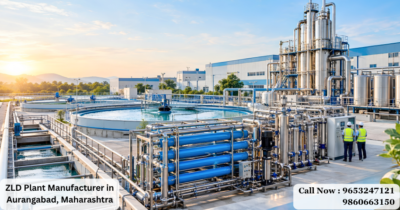
ZLD Plant Manufacturer in Aurangabad, Maharashtra



 Enquire Now
ZLD Plant Manufacturer near Aurangabad, Maharashtra: Design, Cost, Compliance for Industries
If you operate a factory, hospital, hotel, processing unit or municipal facility in the Chhatrapati Sambhajinagar (Aurangabad) region, rising water costs, limited freshwater and stricter discharge norms make effective wastewater management essential. Choosing the right ZLD plant manufacturer in Aurangabad, Maharashtra can support compliance, cost efficiency and sustainability.
Industries in the Chhatrapati Sambhajinagar (Aurangabad) region face growing pressure from limited freshwater, stricter discharge norms and rising water costs. Choosing the right ZLD plant manufacturer in Aurangabad, Maharashtra can help maintain compliance while improving water recovery and operational sustainability.
Call Now: 9653247121
Website: https://aquacaresee.com
About Aquacaresee Pvt. Ltd.
Aquacaresee Pvt Ltd is a Pune-based water and wastewater treatment company established in 2006. With more than 20 years of experience, the company designs, manufactures, supplies, installs and maintains water and wastewater treatment systems for industrial, commercial, institutional and municipal clients.
What the company does:
- Wastewater Treatment Plants (WWTP) for industrial effluent and sewage
- Turnkey projects covering study, design, supply, installation and commissioning
- Consultancy services, including effluent assessment and technology selection
- Installation and commissioning with performance verification
- Annual Maintenance Contracts (AMC)
- Operation & Process Maintenance (O&M)
Where it operates:
From Pune, the team supports clients across Maharashtra, including the Aurangabad region, with site visits, commissioning teams and ongoing maintenance support.
Learn more about the company and its services at https://aquacaresee.com.
Why Zero Liquid Discharge Matters in the Aurangabad
Chhatrapati Sambhajinagar (Aurangabad) is a major industrial region, with clusters such as Waluj, Chikalthana, Shendra and Paithan supporting automotive, pharmaceuticals, beverages, engineering, agro-processing, textiles and other industries.
With variable rainfall, groundwater pressure and rising industrial water demand, water availability is a growing operational concern. ZLD helps industries recycle treated wastewater and reduce dependence on freshwater sources.
Industries adopting ZLD can benefit from:
- Higher water recovery and reuse
- Reduced liquid effluent discharge
- Better compliance and resource management
- Improved operational sustainability
Zero Liquid Discharge Explained in Plain Language
Imagine a factory that uses 200 cubic metres of water a day. Roughly 150 of those come out as wastewater. In a conventional setup, that wastewater is treated to a basic standard and discharged or used for limited purposes. In a ZLD setup, the same 150 cubic metres go through a series of treatment stages. Around 140 or more return to the plant as clean water. What remains is a small quantity of concentrated salts, dried into a solid.
The concept rests on three principles:
- Separate the water from the pollutants
- Recover the water for reuse
- Concentrate and solidify what is left so nothing leaves as liquid
ZLD is therefore a system made up of several technologies working in sequence. No single machine delivers zero discharge by itself.
Key Effluent Parameters for ZLD Plant Design
Most failed ZLD projects fail at the start, not the end. A plant designed from assumptions rarely handles real effluent well. Before any proposal, a competent manufacturer collects and studies the following.
| Parameter | Why It Matters |
|---|---|
| Flow Rate (Average & Peak, KLD) | Determines tank sizes, pump capacity and equipment scale |
| TDS | Influences RO design, evaporator load and energy consumption |
| COD & BOD | Determines biological treatment requirements |
| Hardness | Can cause scaling in RO membranes and evaporators |
| Silica | Creates scaling risks and can limit RO recovery |
| Oil & Grease | May foul membranes if not removed during pre-treatment |
| Suspended Solids & Turbidity | Influences filtration and pre-treatment design |
| pH & Temperature | Affect chemical dosing and material selection |
| Heavy Metals & Toxic Compounds | May require specialized pre-treatment and disposal |
| Flow Variability | Helps prevent undersizing during peak production conditions |
A good practice is to collect samples over several days and across different production activities. A single grab sample on a quiet day can badly misrepresent real conditions.
ZLD Treatment Process: From Pre-Treatment to Recovery
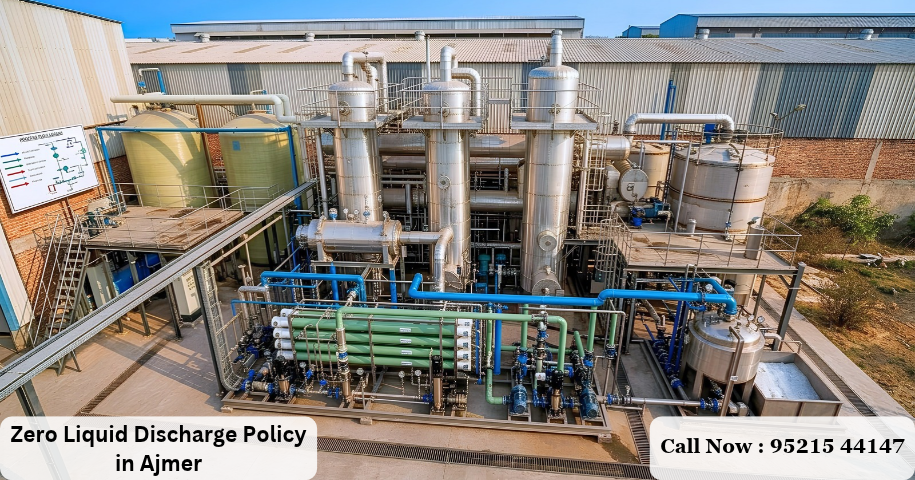
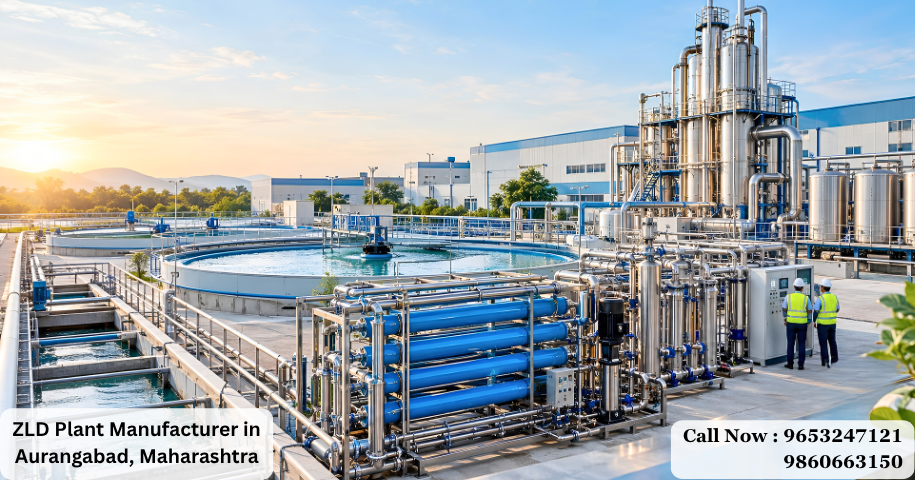
A typical ZLD system combines pre-treatment, biological treatment, membrane concentration and thermal treatment to maximize water recovery and manage concentrated waste.
1. Pre-Treatment
- Screening & Equalization: Removes solids and stabilizes flow.
- Oil & Grease Removal: Protects downstream membranes.
- Chemical Treatment: Coagulation, flocculation and pH correction remove suspended solids and metals.
2. Biological Treatment
Biological systems reduce organic pollutants before membrane treatment:
- ASP: Reliable but requires more space.
- MBBR: Compact and stable treatment.
- MBR: Combines biological treatment with membrane filtration.
3. Membrane-Based Concentration
- UF: Removes fine suspended solids and protects RO membranes.
- RO: Recovers clean water while concentrating salts.
- High-Pressure RO / Brine Concentrators: Handle higher-TDS streams and improve recovery.
Higher RO recovery reduces the volume sent to energy-intensive thermal treatment.
4. Thermal Treatment
RO reject is concentrated through evaporation, while the remaining concentrate is crystallized or dried into solid residue.
Selecting the Right ZLD Evaporation Technology
Evaporation is one of the most energy-intensive ZLD stages. The right option depends on steam availability, electricity, wastewater volume, land and operating conditions.
| Factor | MEE | MVR | Solar Evaporation |
|---|---|---|---|
| Energy Source | Steam | Electricity | Sunlight |
| Best Suited For | Plants with available steam | Sites with reliable power | Small flows with ample land |
| Operating Cost | Depends on steam cost | Generally lower energy use | Low running cost |
| Space Requirement | Moderate | Compact | Large |
| Scaling Risk | High | High | Lower |
| Key Limitation | Steam requirement | Higher electrical dependence | Weather, land and approvals |
Final drying can use an ATFD or crystallizer to convert concentrated solids into a manageable residue.
Industries We Serve
Aquacaresee provides customized water and wastewater treatment solutions based on each industry’s wastewater characteristics and reuse requirements.
Manufacturing & Engineering
Automotive, fabrication, casting and metal-finishing industries require treatment for oil, metals, chemicals and suspended solids.
- Oil & grease removal
- Metal and chemical treatment
- Water reuse for utilities
Pharma, Chemicals & Food
Pharmaceutical, chemical, dairy, brewery and food-processing units may require biological treatment, membranes and ZLD based on COD, TDS and other parameters.
- High COD & TDS treatment
- Biological treatment
- RO and ZLD solutions
Healthcare & Hospitality
Hospitals, hotels and resorts use STP/ETP solutions to treat wastewater and support reuse for flushing, gardening and utilities.
- STP & ETP systems
- Treated water recycling
- Reliable wastewater management
Agriculture, Municipalities & Institutions
Treated water can support irrigation, landscaping, construction and flushing while reducing freshwater dependence.
- Irrigation reuse
- Landscaping & flushing
- Decentralized treatment systems
Understanding ZLD Cost: CAPEX, OPEX & Lifecycle
Capital Cost (CAPEX)
The initial investment depends on:
- Flow rate and effluent characteristics
- Technology selection such as MEE, MVR, RO, MBBR or MBR
- Material of construction
- Automation and PLC/SCADA requirements
- Site and civil conditions
Operating Cost (OPEX)
Regular expenses include:
- Electricity, steam and chemicals
- Membrane and consumable replacement
- Manpower and maintenance
- Sludge and solid residue disposal
Why Lifecycle Cost Matters
A lower purchase price may result in higher energy, chemical and maintenance costs. Higher RO recovery and effective pre-treatment can reduce long-term operating expenses.
E-E-A-T: Experience, Expertise, Authoritativeness and Trust
Experience
Aquacaresee’s guidance is based on 20+ years of designing, installing and maintaining treatment plants. Strengthen first-hand experience with real project photos, installation stories, test results and case studies.
Experience
Provide practical, technically accurate information on treatment processes, technologies and costs.
Authoritativeness
Build authority through genuine industry mentions, certifications, registrations and consistent company details across Google Business Profile and directories.
Trustworthiness
Maintain clear contact details, an informative About page, privacy policy and accurate claims. Use genuine customer reviews and clearly state that results depend on effluent quality and site conditions.
Frequently Asked Questions (FAQs)
Q1. How much water can a ZLD plant recover?
Ans: A well-designed system commonly recovers 90 to 95 percent or more of incoming wastewater, depending on effluent characteristics and technology.
Q2. What does a ZLD plant do?
Ans: A ZLD plant treats industrial wastewater, recovers water for reuse and converts the remaining dissolved solids into solid waste, eliminating liquid discharge.
Q3. How much does a ZLD plant cost in India?
Ans: Cost depends on flow, effluent quality, technology, materials, automation and site conditions. An effluent analysis is required for an accurate quotation.
Q4. Is ZLD mandatory in Maharashtra?
Ans: Requirements vary by industry, location and consent conditions. Some sectors may require ZLD. Check applicable MPCB requirements for your facility.
Q5. What is the difference between ETP and ZLD?
Ans: An ETP treats effluent to meet discharge standards, while a ZLD plant goes further by recovering water and eliminating liquid discharge through RO, evaporation and crystallization.
Contact Us
Phone:+ 91 – 96532 47121 / + 91 – 98606 63150
Email: marketing@aquacaresee.com
Website: www.aquacaresee.com
Add: 8th floor office No.810, KAMDHENU 23 WEST, TTC Industrial Area, MIDC Industrial Area, Pawne, Navi Mumbai, Maharashtra 400705, Navi Mumbai, Maharashtra 400705.
Add: Office No. 204, Aquacaresee Pvt. Ltd.; 205; and 206, Old Mumbai-Pune Hwy, opp. Hotel Silver Seven, Akurdi Gaothan, Vivek Nagar, Akurdi, Pimpri-Chinchwad, Pune, Maharashtra 411035.
Add: Hanuman Vatika, F/1 – 56-A/3, I, opposite Golden Dags Resorts, near 200 Feet Bypass Road, Hanuman Vatika-1, Heerapura, Heerawala, Jaipur, Rajasthan 302024.
Conclusion
A ZLD plant is more than a compliance tool. It protects your business from water shortages, regulatory action and rising utility costs while improving your environmental standing. The key is choosing a ZLD plant manufacturer near Aurangabad, Maharashtra that combines proven experience, in-house engineering, honest pricing and long-term support.
With over 20 years of experience since 2006, Aquacaresee Pvt Ltd helps manufacturing units, hospitals, hotels, agro-industries and municipalities turn wastewater into a reusable resource through tailored turnkey solutions, AMC and O&M.
Call Now: 9653247121
“Don’t forget to share this post!”