
Blog
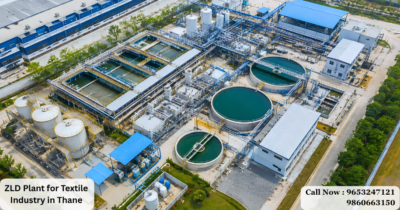
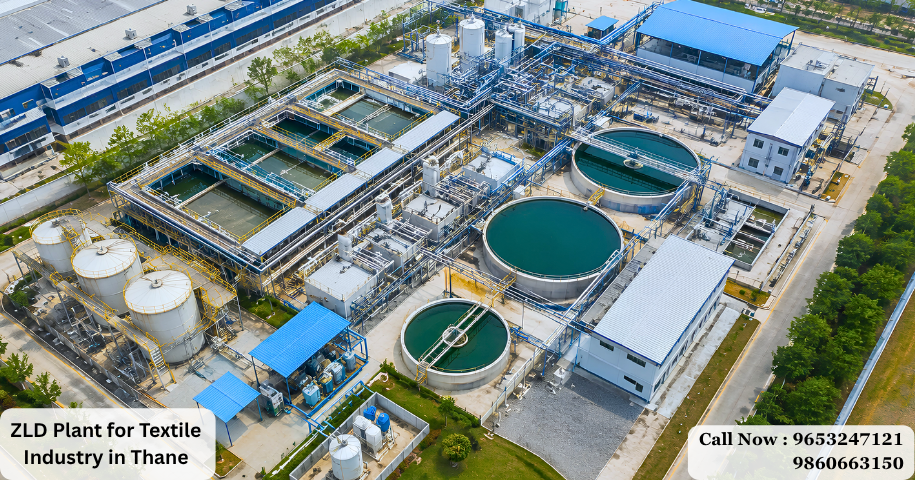
ZLD Plant for Textile Industry in Thane



 Enquire Now
ZLD Plant for Textile Industry in Thane: Sustainable Wastewater Management for Modern Textile Manufacturing
Call Now: 9653247121
Website: https://aquacaresee.com
About Aquacaresee Pvt. Ltd.
What Is a ZLD Plant for Textile Industry?
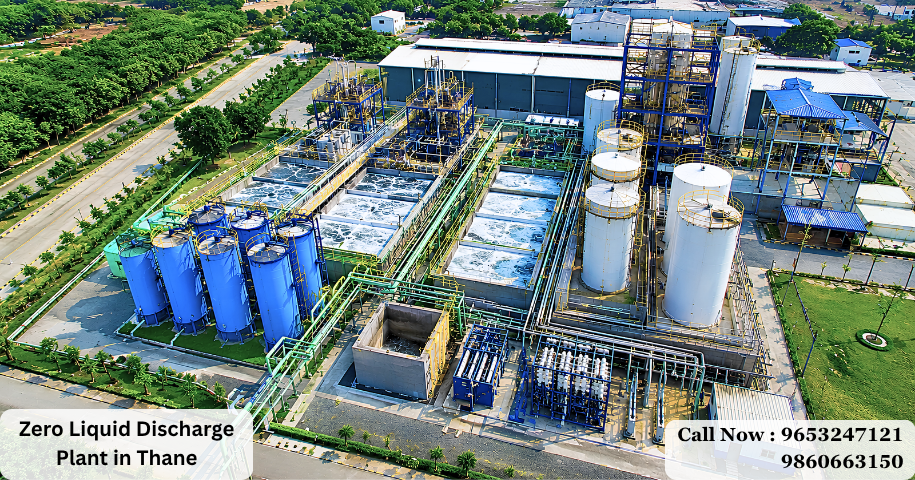
A Zero Liquid Discharge Plant for Textile Industry is an integrated wastewater treatment system designed to minimize or eliminate liquid wastewater discharge from a textile manufacturing facility by treating, recovering and reusing wastewater within the industrial process.
Unlike conventional wastewater treatment systems that may treat wastewater before discharge, a ZLD approach focuses strongly on water recovery and minimizing liquid discharge.
A typical ZLD configuration may combine several treatment technologies depending on the characteristics of the textile effluent.
These can include:
- Preliminary treatment
- Equalization
- pH correction
- Coagulation and flocculation
- Biological treatment where required
- Clarification
- Advanced filtration
- Ultrafiltration (UF)
- Reverse Osmosis (RO)
- Multiple-effect evaporation or another suitable evaporation technology
- Crystallization where required
- Sludge and salt/residue management
- Recovered-water storage and reuse
The final configuration should not be selected solely from a standard template. A properly engineered ZLD plant should be developed after understanding the wastewater generation points, flow variations, contaminant loading, existing treatment infrastructure and desired water-recovery targets.
Why Do Textile Industries Need ZLD Systems?
Textile manufacturing, especially dyeing and finishing, can generate wastewater containing colour, salts, chemicals, varying pH and organic contaminants. While conventional ETPs provide essential treatment, a ZLD system can support higher water recovery and significantly reduce liquid discharge.
1. Water Recovery and Reuse
ZLD enables treated water recovery for suitable applications such as washing, utilities, cooling, process operations and other non-potable industrial uses, depending on required water quality.
2. Reduced Freshwater Consumption
Reusing treated wastewater helps textile industries reduce dependence on freshwater sources and improve overall water-use efficiency.
3. Minimal Liquid Discharge
A properly designed ZLD system can minimize or eliminate liquid discharge from the targeted wastewater stream, supporting regulatory and sustainability objectives.
4. Better Environmental Management
Advanced treatment helps manage colour, salts, organic matter and other contaminants while supporting controlled handling of concentrated residues.
5. Sustainable Manufacturing
By treating, recovering and reusing wastewater, ZLD supports a more circular approach to water management and helps textile manufacturers move toward sustainable production.
Textile Wastewater Treatment Challenges in Thane
Thane and the broader Mumbai Metropolitan Region have a strong industrial ecosystem, with manufacturing activities operating alongside densely developed urban areas.
For textile industries, wastewater management can be challenging because effluent characteristics can change according to:
- Textile type
- Dyeing process
- Chemicals used
- Production volume
- Batch size
- Washing cycles
- Printing processes
- Finishing chemicals
- Salt concentration
- Temperature
- pH
- Colour loading
- Organic loading
- Suspended solids
- Total Dissolved Solids (TDS)
This variability means that a ZLD Plant for Textile Industry in Thane should be designed around actual wastewater data rather than a generic plant configuration.
How Does a ZLD Plant for Textile Industry Work?
A ZLD Plant for Textile Industry treats and recovers wastewater through multiple stages, helping reduce liquid discharge and recover water for suitable industrial reuse.
1. Consultation, Wastewater Analysis & Process Design
The project begins with understanding the industrial process, wastewater flow, existing treatment system, available space, water reuse goals, and future requirements.
Detailed wastewater analysis may include pH, TDS, TSS, COD, BOD, oil and grease, hardness, chlorides, sulphates, silica, heavy metals, chemicals, and flow variations.
Based on these results, the ZLD process is engineered with suitable treatment technologies, recovery targets, equipment capacities, chemical requirements, energy requirements, and automation systems.
2. Equipment Selection, Manufacturing & Installation
After finalizing the process design, appropriate equipment is selected and manufactured or sourced according to project requirements. Depending on the application, this may include:
- Tanks, pumps and filtration systems
- Clarifiers and chemical dosing systems
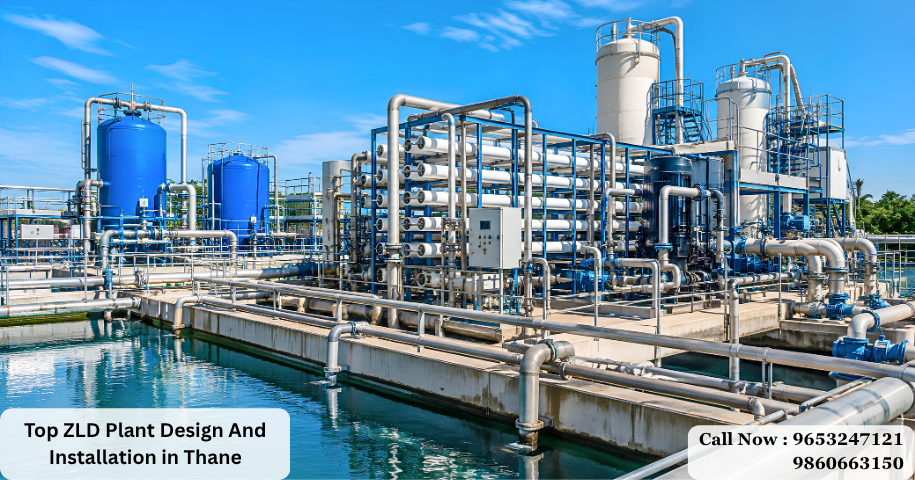
- Membrane and Reverse Osmosis (RO) systems
- Evaporators and crystallizers
- Heat exchangers and instrumentation
- Electrical, automation and control systems
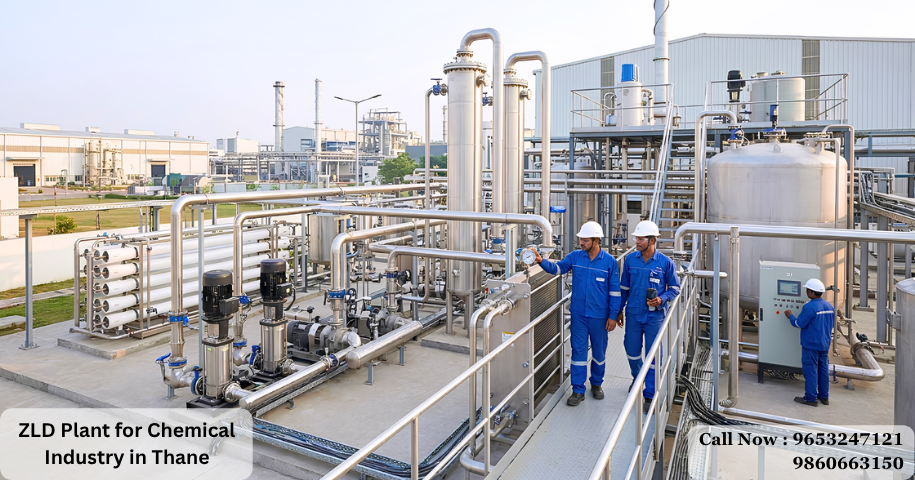
The equipment is then installed with the required piping, electrical connections, instrumentation, utility connections, and interconnections.
3. Commissioning, Optimization & Operator Training
After installation, the ZLD plant undergoes commissioning to verify equipment operation and process performance. This may include wet trials, instrumentation checks, chemical optimization, membrane commissioning, and operator training.
After startup, operating parameters can be optimized to improve water recovery, membrane performance, chemical consumption, energy efficiency, evaporator performance, and overall plant stability.
4. AMC, O&M & Long-Term Support
A turnkey ZLD project can also include ongoing Annual Maintenance Contracts (AMC) and Operation & Process Maintenance (O&M) support.
Regular maintenance, performance monitoring, troubleshooting, and preventive servicing help maintain plant efficiency, reduce unexpected downtime, and support reliable long-term operation.
In short, a ZLD turnkey project can cover the complete lifecycle—from wastewater analysis and engineering to installation, commissioning, optimization, and ongoing maintenance.
Key Technologies Used in a Textile ZLD Plant
A modern ZLD Plant for Textile Industry in Thane can integrate multiple treatment technologies to achieve effective wastewater treatment, water recovery and liquid discharge minimization.
1. Core Treatment Technologies
How Much Does a ZLD Plant for Textile Industry in Thane Cost?
There is no fixed price for a ZLD Plant for Textile Industry in Thane. The total investment depends on wastewater characteristics, treatment capacity, recovery requirements and site conditions.
Major Cost Factors
- Plant Capacity: Larger wastewater flow requires larger treatment equipment and infrastructure.
- Wastewater Quality: TDS, COD, hardness, colour and scaling potential affect treatment complexity.
- Existing ETP: A properly functioning ETP may reduce the need for certain new treatment stages.
- Water Recovery Target: Higher recovery requirements may require additional treatment and polishing stages.
- RO System: RO configuration, capacity and number of stages influence both capital and operating costs.
- Evaporation & Crystallization: These can represent a significant portion of the overall ZLD investment, particularly for high-TDS streams.
- Automation: Instrumentation and automation requirements can affect the project cost.
- Installation & Civil Work: Piping, electrical systems, civil construction and installation requirements vary by site.
- Operating Cost: Energy, chemicals, membranes, maintenance and residue management should also be considered when evaluating the overall project economics.
For an accurate ZLD plant cost estimate, it is recommended to evaluate the wastewater flow rate, laboratory analysis and required water recovery before finalizing the process design.
ZLD Plant for Textile Industry in Thane: Who Can Benefit?
A ZLD Plant for Textile Industry in Thane can be useful for textile businesses that generate high volumes of wastewater and require better water recovery with minimal liquid discharge. Different textile processes produce different wastewater characteristics, so the ZLD system should be designed according to the specific industry and process.
Textile Dyeing & Processing Units
Dyeing and processing operations often generate wastewater containing colour, dissolved salts, chemicals and varying organic loads. A customized ETP and ZLD system can help treat these streams and recover water for suitable industrial reuse.
Benefits of Installing a ZLD Plant for Textile Industry in Thane
Why Choose Aquacaresee for a ZLD Plant for Textile Industry in Thane?
Aquacaresee Pvt. Ltd. has been working in water and wastewater treatment since 2006, providing solutions for industrial wastewater treatment and water recovery.
Customized ZLD Solutions
Every textile wastewater stream has different flow rates, TDS, chemical loading and recovery requirements. Aquacaresee can develop ZLD solutions based on:
- Plant capacity and wastewater characteristics
- Existing ETP infrastructure
- Required water recovery
- Available space and energy conditions
- Reuse requirements and project budget
Complete Project Support
Aquacaresee can support the project across key stages, including process evaluation, engineering, manufacturing, supply, installation, commissioning, operator guidance, AMC and O&M support.
Existing ETP Integration
Where technically suitable, the ZLD system can be integrated with an existing ETP instead of replacing the entire treatment system. The existing plant can be evaluated for treatment performance, hydraulic capacity, TSS and colour removal, membrane-feed quality and RO suitability.
Industries That Can Use Aquacaresee Water & Wastewater Treatment Solutions
Although this article focuses on the textile industry, Aquacaresee’s solutions can be customized for several sectors.
Manufacturing Industries
Manufacturing facilities can require ETP, ZLD, RO, wastewater recycling and industrial water treatment solutions.
Healthcare
Hospitals and healthcare facilities can require specialized sewage and wastewater treatment systems based on their wastewater profile and applicable requirements.
Hospitality
Hotels and resorts can benefit from STP, wastewater recycling and water treatment solutions.
Agriculture
Agricultural and allied facilities may require water treatment, recycling or wastewater-management solutions depending on the application.
Municipalities
Municipal organizations can require sewage treatment, wastewater treatment and water-reuse infrastructure.
Experience • Expertise • Authoritativeness • Trustworthiness (E-E-A-T)
Experience
Aquacaresee, established in 2006, brings over two decades of hands-on experience in water and wastewater treatment projects, where practical field decisions during installation, commissioning, and operation ensure reliable ZLD plant performance.
Expertise
ZLD engineering integrates wastewater treatment, membrane separation, RO, filtration, evaporation, crystallization, process engineering, automation, water reuse, and sludge management, all functioning together as a single optimized industrial system.
Authoritativeness
Aquacaresee demonstrates authority through its comprehensive coverage of ZLD, ETP, STP, RO, UF, NF, and industrial wastewater systems, along with dedicated ZLD solutions for Mumbai and Navi Mumbai regions.
Trustworthiness
Frequently Asked Questions (FAQs)
Q1.What is a ZLD Plant?
Ans: A Zero Liquid Discharge plant is an advanced wastewater treatment system designed to recover and reuse water while minimizing or eliminating liquid discharge from the designated wastewater stream.
Q2. What is a ZLD Plant for Textile Industry?
Ans: It is a customized ZLD system designed around textile wastewater generated by processes such as dyeing, washing, printing, bleaching and finishing.
Q3. Can ZLD be connected to an existing textile ETP?
Ans: Yes, where technically feasible. The existing ETP should first be evaluated for treatment performance, capacity and compatibility with downstream advanced treatment.
Q4. What technologies are used in textile ZLD?
Ans: Depending on the project, technologies can include ETP, clarification, filtration, UF, RO, evaporation and crystallization.
Q5. How much water can a textile ZLD plant recover?
Ans: Recovery depends on the wastewater characteristics, pretreatment, membrane configuration, concentration processes and overall system design. A project-specific water balance should be developed instead of assuming one recovery percentage for every textile plant.
Contact Aquacaresee Pvt Ltd
- Phone:+ 91 – 96532 47121 / + 91 – 98606 63150
- Email: marketing@aquacaresee.com
- Website: www.aquacaresee.com
- Add: 8th floor office No.810, KAMDHENU 23 WEST, TTC Industrial Area, MIDC Industrial Area, Pawne, Navi Mumbai, Maharashtra 400705, Navi Mumbai, Maharashtra 400705.
- Add: Office No. 204, Aquacaresee Pvt. Ltd.; 205; and 206, Old Mumbai-Pune Hwy, opp. Hotel Silver Seven, Akurdi Gaothan, Vivek Nagar, Akurdi, Pimpri-Chinchwad, Pune, Maharashtra 411035.
- Add: Hanuman Vatika, F/1 – 56-A/3, I, opposite Golden Dags Resorts, near 200 Feet Bypass Road, Hanuman Vatika-1, Heerapura, Heerawala, Jaipur, Rajasthan 302024.
Conclusion
With its experience since 2006 and capabilities in design, manufacturing, supply, installation, commissioning, AMC and O&M, Aquacaresee Pvt Ltd can provide customized water and wastewater treatment solutions for textile industries and other industrial sectors.
Call Now: 9653247121
“Don’t forget to share this post!”