

Blog
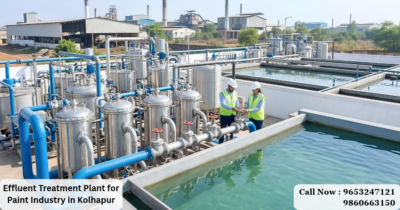
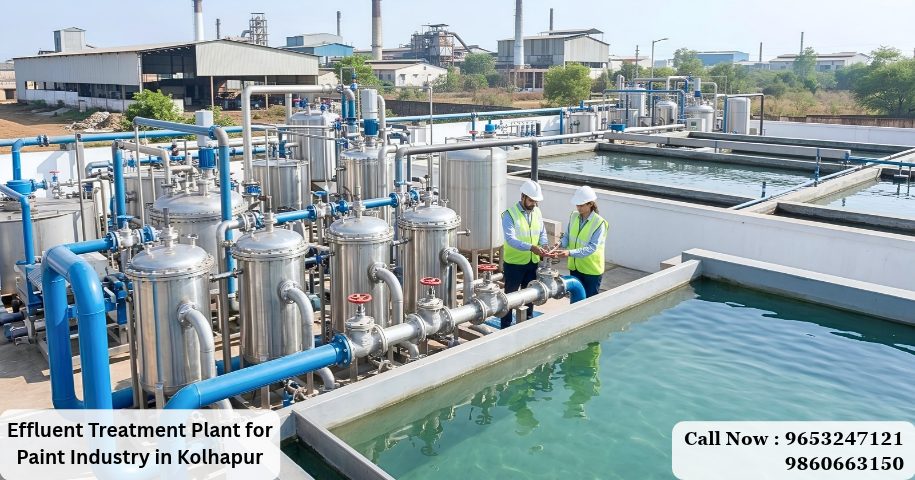
Effluent Treatment Plant for Paint Industry in Kolhapur



 Enquire Now
Effluent Treatment Plant for Paint Industry in Kolhapur: Customized Solutions
Aquacaresee Pvt. Ltd., a Pune-based water and wastewater treatment solutions company established in 2006, provides engineering, design, supply, installation, commissioning, and maintenance services for industrial water and wastewater treatment systems. With 20+ years of experience, the company offers solutions tailored to the wastewater characteristics and operational requirements of different industries.
The Effluent Treatment Plant for Paint Industry in Kolhapur is an essential solution for paint manufacturers and coating industries that need to manage wastewater generated during production, equipment washing, pigment processing, floor cleaning, and other industrial activities. Paint manufacturing wastewater can contain pigments, resins, binders, suspended solids, surfactants, oils, additives, and organic contaminants.
Call Now: 9653247121 Website: https://aquacaresee.com
About Us
Aquacaresee Pvt. Ltd., established in 2006, is a Pune-based water and wastewater treatment solutions company with 20+ years of experience serving industrial, commercial, institutional, agricultural, and municipal sectors.
Key Solutions Offered:
- Effluent Treatment Plants (ETP)
- Sewage and Wastewater Treatment Plants (STP/WWTP)
- Water Treatment Plants (WTP)
- Industrial RO, UF, NF, and MBR Systems
- Zero Liquid Discharge (ZLD) Solutions
Services: Engineering design, consultancy, equipment supply, installation, commissioning, AMC, and Operation & Maintenance (O&M).
Solutions for Paint Industries in Kolhapur
Paint manufacturing wastewater may contain pigments, resins, oils, suspended solids, colour, and high COD levels. Treatment planning depends on wastewater quality, flow rate, reuse objectives, available space, and operating costs.
Aquacaresee provides customized engineering solutions to help paint manufacturers identify suitable treatment technologies and explore water recycling opportunities.
What Is an Effluent Treatment Plant for the Paint Industry?
An Effluent Treatment Plant (ETP) treats industrial wastewater before discharge or reuse by reducing contaminants to meet applicable quality requirements.
Paint industry wastewater may contain pigments, resins, oils, suspended solids, colour, and organic pollutants from equipment cleaning, production, and factory-floor washing.
An Effluent Treatment Plant for Paint Industry in Kolhapur is designed according to wastewater quality, flow rate, treatment objectives, and reuse requirements.
Typical ETP treatment stages include:
- Wastewater collection and screening
- Equalization and pH correction
- Coagulation and flocculation
- Clarification and solids separation
- Biological treatment, where suitable
- Filtration and advanced treatment, if required
- Sludge dewatering and disposal
The final treatment process depends on laboratory analysis, discharge standards, and project requirements. A properly designed ETP helps reduce colour, suspended solids, and organic pollutants while supporting wastewater reuse where feasible.
Why Paint Manufacturers in Kolhapur Need Specialized Wastewater Treatment
Paint manufacturing and coating operations generate wastewater containing pigments, resins, oils, suspended solids, colour, and organic pollutants. A suitable ETP helps manage these contaminants and meet applicable discharge requirements.
Common Wastewater Contaminants
- Pigments and Suspended Solids: Require coagulation, flocculation, and clarification.
- Resins and Organic Compounds: Can increase COD and require suitable chemical or biological treatment.
- Variable pH and Colour: May need pH correction and additional treatment to achieve the required water quality.
Water Recycling and Pollution Control
Treated wastewater may be reused for suitable non-product-contact applications, depending on water quality and process requirements. Proper treatment also helps reduce pollutant loads before discharge.
Choosing the Right ETP Solution
An Effluent Treatment Plant for Paint Industry in Kolhapur should be designed according to wastewater testing, production activities, discharge standards, and reuse objectives. A customized system helps manufacturers improve treatment performance and explore water conservation opportunities.
Common Types of Wastewater Generated by Paint Manufacturing Units
Before selecting an Effluent Treatment Plant for Paint Industry in Kolhapur, manufacturers should identify the wastewater generated during production, cleaning, and other factory operations.
Equipment Washing and Pigment Processing
Cleaning mixing tanks, pipelines, and production equipment can release pigments, resins, binders, and additives. Pigment grinding and handling may also generate coloured wastewater containing suspended and colloidal solids.
Floor Cleaning and Water-Based Paint Production
Factory-floor washing can introduce paint residues, dust, and oils into wastewater. Water-based paint manufacturing may produce effluent containing emulsions, polymers, surfactants, and organic compounds that require suitable treatment.
Coating, Metal Finishing, and Utility Operations
Component washing, degreasing, and surface preparation may generate wastewater containing oils, dissolved salts, or metals. Cooling-system blowdown, boiler wastewater, and domestic sewage may also require separate assessment.
Why Segregation Matters: Separating wastewater streams where practical helps optimize treatment, improve process efficiency, and avoid unnecessary chemical consumption.
Effluent Treatment Plant Process for the Paint Industry
An Effluent Treatment Plant for Paint Industry in Kolhapur combines suitable physical, chemical, and biological processes based on wastewater quality, treatment objectives, and reuse requirements.
1. Collection and Preliminary Treatment
Wastewater is collected and segregated where necessary. Screening and oil separation remove debris and floating contaminants, protecting downstream equipment.
2. Equalization and pH Correction
An equalization tank balances variations in wastewater flow and pollutant concentration. pH correction maintains suitable conditions for subsequent chemical or biological treatment.
3. Coagulation, Flocculation, and Clarification
Chemical treatment helps separate pigments, suspended solids, and certain colour-producing contaminants. Coagulation and flocculation form larger particles, which are removed through clarification or suitable separation methods.
4. Biological Treatment
Where wastewater contains biodegradable organic pollutants, technologies such as MBBR, SBR, ASP, or MBR may help reduce organic loads. Selection depends on wastewater characteristics and treatability testing.
5. Filtration and Membrane Treatment
Sand filtration, activated carbon filtration, UF, or RO may be incorporated to achieve the required treated water quality. Membrane systems are particularly relevant when dissolved contaminant removal or water recycling is required.
6. Sludge Management
Sludge generated during chemical treatment and clarification requires appropriate thickening, dewatering, and compliant handling or disposal.
7. Treated Water Reuse
Treated water may be reused for suitable industrial applications after verifying its quality against the intended use. The final system configuration should be based on laboratory analysis, discharge requirements, and project economics.
Important Parameters for Paint Wastewater Analysis
A reliable treatment design begins with understanding the wastewater. Laboratory analysis helps establish the baseline conditions and supports selection of the appropriate treatment sequence.
Important parameters may include:
| Parameter | Why it matters |
|---|---|
| pH | Indicates acidity or alkalinity and affects chemical treatment and biological processes. |
| COD | Estimates the oxygen equivalent of chemically oxidizable substances. |
| BOD | Indicates the biodegradable organic load under the specified test conditions. |
| TSS | Measures suspended particles that may require separation or filtration. |
| TDS | Indicates dissolved solids that may influence reuse and membrane treatment. |
| Colour | Helps evaluate the need for colour removal and polishing. |
| Oil and grease | Indicates whether oil separation or dedicated pretreatment is needed. |
| Metals | Relevant when pigments, additives, or surface treatment processes introduce metals. |
| Toxicity or biodegradability | Helps assess whether biological treatment is suitable. |
Additional parameters may be needed depending on the raw materials and manufacturing processes used.
The analysis should represent normal operations and, where relevant, high-strength wastewater generated during equipment cleaning or batch changeovers. A single sample may not fully represent a facility with highly variable effluent.
Treatment targets must be established against the applicable discharge or reuse requirements. No particular outlet quality should be guaranteed without supporting data, an appropriate design, and operating verification.
Industries That May Need Industrial Wastewater Treatment in Kolhapur
Industrial wastewater treatment is important across several sectors in Kolhapur. Each industry requires a suitable treatment approach based on its wastewater characteristics and discharge or reuse requirements.
Manufacturing and Engineering Industries
Paint manufacturers, automotive units, metal finishing facilities, and engineering industries may generate wastewater containing pigments, oils, suspended solids, and process chemicals. Appropriate treatment helps manage these contaminants and improve effluent quality.
Chemical and Healthcare Industries
Chemical manufacturing can produce wastewater with varying pH, organic loads, and dissolved contaminants. Hospitals also require specialized wastewater management based on their operational and regulatory requirements.
Hospitality, Agriculture, and Municipal Applications
Hotels and commercial establishments typically require sewage and kitchen wastewater treatment. Agricultural and municipal projects may need water treatment, sewage treatment, and recycling systems suited to their specific applications.
Aquacaresee provides water and wastewater treatment solutions across these sectors, with system design based on wastewater quality, treatment objectives, and intended reuse or discharge.
Why Consider Aquacaresee for Your Paint Industry Wastewater Treatment Project?
Aquacaresee Pvt. Ltd. is a Pune-based water and wastewater treatment solutions company established in 2006, offering engineering and project support for industrial wastewater treatment applications.
Customized Treatment Solutions
Aquacaresee offers ETP, WWTP, industrial RO, UF, and ZLD solutions. For paint manufacturers, treatment planning considers wastewater quality, pollutant levels, treatment objectives, and water reuse potential.
End-to-End Project Support
Services include consultancy, engineering design, equipment supply, installation, commissioning, AMC, and Operation & Maintenance (O&M), depending on project requirements.
Serving Kolhapur’s Industrial Areas
Paint manufacturers in Kolhapur, Ichalkaranji, Kagal, Shiroli, and Jaysingpur can discuss their wastewater treatment requirements with Aquacaresee to explore suitable technologies, operating needs, and project-specific solutions.
E-E-A-T (Experience, Expertise, Authoritativeness, Trustworthiness)
Experience
Aquacaresee Pvt. Ltd. brings 20+ years of experience in water and wastewater treatment solutions, supporting industries with customized effluent treatment systems designed around their operational requirements.
Expertise
The company provides engineering solutions for industrial wastewater treatment, including ETP design, equipment selection, process optimization, installation, and commissioning for paint manufacturing and other industrial applications.
Authoritativeness
Effective paint-industry wastewater treatment requires an understanding of pigments, resins, suspended solids, chemical residues, and effluent quality parameters. Treatment solutions should be designed to meet applicable pollution control requirements and support responsible wastewater management.
Trustworthiness
Aquacaresee focuses on practical engineering, reliable project execution, and ongoing service support. Its water and wastewater treatment solutions help industries improve treatment performance, manage wastewater responsibly, and support water reuse wherever technically feasible.
Frequently Asked Questions (FAQs)
Q1. Can an ETP handle wastewater from different paint formulations?
Ans: Yes, an ETP can be customized to handle wastewater variations from water-based paints, coatings, and other paint formulations.
Q2. How does paint wastewater affect treatment equipment?
Ans: Pigments, resins, and chemical residues can cause clogging, scaling, or fouling if the treatment system is not designed appropriately.
Q3. Can paint sludge be reused or recovered?
Ans: Some sludge components may be suitable for recovery, depending on their composition and applicable waste-management regulations.
Q4. Does paint production require continuous ETP operation?
Ans: Not always. Operating schedules depend on production hours, wastewater generation patterns, storage capacity, and discharge requirements.
Q5. How can an industry assess whether its existing ETP needs upgrading?
Ans: Review treatment performance, effluent test results, production changes, operating costs, and compliance requirements to identify upgrade needs.
Contact Us
Phone:+ 91 – 96532 47121 / + 91 – 98606 63150
Email: marketing@aquacaresee.com
Website: www.aquacaresee.com
Add: 8th floor office No.810, KAMDHENU 23 WEST, TTC Industrial Area, MIDC Industrial Area, Pawne, Navi Mumbai, Maharashtra 400705, Navi Mumbai, Maharashtra 400705.
Add: Office No. 204, Aquacaresee Pvt. Ltd.; 205; and 206, Old Mumbai-Pune Hwy, opp. Hotel Silver Seven, Akurdi Gaothan, Vivek Nagar, Akurdi, Pimpri-Chinchwad, Pune, Maharashtra 411035.
Add: Hanuman Vatika, F/1 – 56-A/3, I, opposite Golden Dags Resorts, near 200 Feet Bypass Road, Hanuman Vatika-1, Heerapura, Heerawala, Jaipur, Rajasthan 302024.
Conclusion
Choosing the right Effluent Treatment Plant for Paint Industry in Kolhapur is an important step for paint manufacturers and coating facilities seeking effective wastewater management, improved treated water quality, and opportunities for water conservation.
Aquacaresee Pvt. Ltd., established in 2006 and based in Pune, provides water and wastewater treatment solutions along with engineering, supply, installation, commissioning, consultancy, and maintenance-related services. Its broader treatment portfolio supports industrial and other applications requiring tailored water management systems.
Call Now: 9653247121
“Don’t forget to share this post!”