

Blog
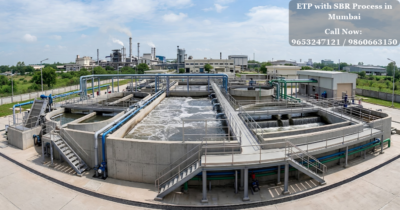
ETP with SBR Process in Mumbai



 Enquire Now
ETP with SBR Process in Mumbai | Aquacaresee Pvt. Ltd.
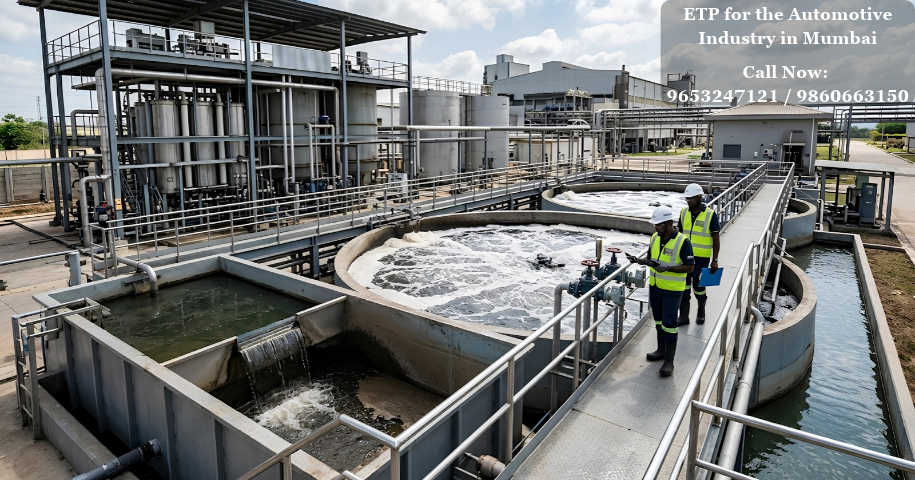
Mumbai’s automotive belt spanning paint shops, stamping lines, component washers, and coolant circuits produces a steady stream of heavily loaded process water every shift. Aquacaresee Pvt. Ltd. engineers a ETP with SBR Process in Mumbai that responds to these real production conditions rather than off-the-shelf blueprints. Our technical team has worked on industrial water problems since 2006 and knows how oils, metals, and surfactants behave inside live plant environments. Every engagement starts with a detailed effluent audit before any treatment hardware is recommended.
Plants across the Mumbai region depend on effluent treatment systems, sewage plants, and integrated water treatment trains for component units, assembly shops, and industrial parks. Aquacaresee also handles turnkey execution, consultancy, erection, commissioning, and AMC contracts. Service coverage spans Mumbai, Navi Mumbai, Pune, and nearby industrial corridors. Sectors served include automotive, engineering, chemical, pharmaceutical, food, and municipal operations.
Call Now: 9653247121
Website: https://aquacaresee.com
About Us
Aquacaresee Pvt. Ltd. was founded in 2006 and has dedicated nearly two decades to refining effluent and wastewater treatment systems for process industries. The company manages design, fabrication, supply, installation, commissioning, consultancy, AMC, and O&M under one accountable roof.
Headquartered in Pune with a regional office in the Jebel Ali Industrial Area, the Aquacaresee team supports industrial and municipal clients across India and the Gulf.
Bringing engineering, fabrication, project delivery, and service support together under one roof turns every effluent project into a full lifecycle partnership rather than a one-time sale.
Rather than treating industrial water management as a series of separate equipment purchases, Aquacaresee evaluates the complete effluent treatment requirement.
This covers:
- SBR-based biological treatment design
- Automotive effluent characterisation
- Shop-floor flow and load assessment
- Cycle optimisation for variable loads
- Fabrication and equipment supply
- Erection and commissioning
- AMC and O&M support
For plant managers and industrial estates seeking a long-term treatment partner rather than a one-off equipment vendor, this end-to-end model delivers real operational value.
What Makes SBR-Based Effluent Treatment Different
A Sequencing Batch Reactor (SBR) is a fill-and-draw biological system that performs equalisation, aeration, settling, and decanting in a single tank. Within an effluent treatment system, SBR technology offers tight process control and consistent discharge quality even when loads fluctuate.
Unlike conventional continuous-flow systems, an SBR operates in timed cycles. This gives operators the flexibility to adjust aeration, settling, and decant phases based on the actual strength of incoming wastewater a critical advantage for automotive plants with variable production schedules.
A well-engineered SBR-based system can integrate multiple treatment stages depending on effluent characteristics. These may include pretreatment, oil separation, pH correction, membrane processes, Reverse Osmosis (RO), Ultrafiltration (UF), and tertiary polishing.
The exact configuration should never be assumed identical for every plant. Effluent composition, flow rate, Total Dissolved Solids (TDS), Chemical Oxygen Demand (COD), Biological Oxygen Demand (BOD), oil and grease content, heavy metals, pH, temperature, water-reuse requirements, and site conditions all shape the final plant design.
That is why selecting an experienced ETP with SBR Process in Mumbai provider is essential when planning a water recycling project.
Why Mumbai Automotive Facilities Require Dependable Effluent Treatment
Industrial zones across Mumbai and their surrounding manufacturing clusters house stamping units, paint booths, component washing lines, and other water-intensive operations.
Many of these facilities depend on steady water supplies for cooling, washing, rinsing, utilities, and other processes. Effluent from these activities may carry oils, grease, heavy metals, suspended solids, organic contaminants, chemicals, and other substances requiring specialised treatment.
A conventional treatment approach may not always meet the complete water-recovery requirements of a large manufacturing facility.
This is where an ETP with SBR Process in Mumbai partner can help factories evaluate advanced treatment and recycling options.
A modern treatment system can support manufacturers by helping them:
- Increase wastewater recycling and reuse
- Reduce dependence on freshwater
- Minimise liquid effluent discharge
- Improve water-management efficiency
- Support environmental sustainability objectives
- Recover treated water for suitable reuse applications
- Manage concentrated wastewater streams
- Improve long-term wastewater management
- Meet CPCB and MPCB compliance requirements
- Develop a more circular approach to industrial water use
The objective is not simply to install equipment. A successful treatment project requires proper effluent characterisation, process engineering, equipment selection, plant integration, commissioning, and ongoing operational support.
SBR-Based Effluent Treatment Services for Automotive Clients
Automotive plants and component complexes generate effluent from paint booths, washing bays, and machining processes. Aquacaresee provides tailored treatment solutions based on effluent characteristics, supporting water recycling, recovery, sludge management, and reduced effluent discharge.
SBR Systems for Paint Shops and Pre-Treatment Lines
Paint shops and pre-treatment lines may generate complex effluent containing solvents, heavy metals, organic matter, and cleaning agents. Aquacaresee designs suitable SBR-based treatment solutions using technologies such as MBBR, SBR, MBR, filtration, and disinfection, depending on requirements.
High-Throughput Treatment for Large Assembly Plants
Large assembly plants, component units, and mixed-use industrial buildings consume water for machining, cleaning, and utility operations. Customised treatment and water reclamation systems can support water recycling, reuse, and improved water efficiency.
Recycling Solutions for Cooling Towers and Landscaping
Cooling tower make-up and landscaping applications can benefit from treatment and recycling solutions. Aquacaresee evaluates effluent quality, flow, and reuse requirements to develop suitable treatment systems.
Municipal and Industrial Treatment Infrastructure
Industrial estate projects require careful planning for effluent flow, water quality, land, energy, sludge, and reuse requirements. Aquacaresee provides consultancy, turnkey projects, and customised water and treatment solutions for suitable industrial applications.
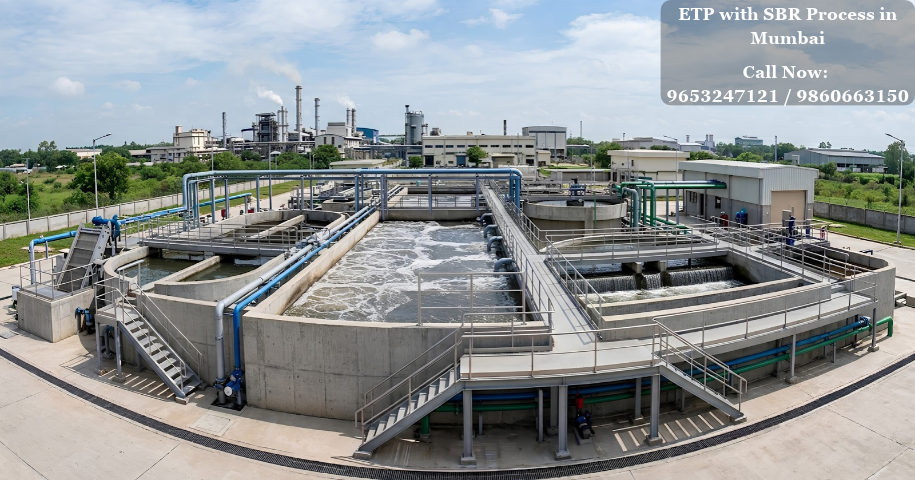
How SBR-Based Effluent Treatment Plants Work
An effluent treatment plant processes influent through multiple stages to recover water and minimise liquid discharge. The exact process depends on effluent quality, flow, and recovery requirements.
1. Collection and Flow Equalisation
Effluent is collected and equalised to maintain consistent flow and composition.
2. Preliminary Treatment
Processes such as screening, oil separation, pH correction, coagulation, clarification, filtration, and softening remove contaminants and protect downstream systems.
3. Biological Processing in the SBR Basin
The SBR reactor fills, aerates, settles, and decants in timed cycles. Technologies such as MBBR, SBR, and MBR help degrade organic matter while separating treated water from biomass.
4. Advanced Polishing
Advanced stages such as filtration, disinfection, and membrane systems further polish the treated water when required.
5. Sludge Management
Further concentration can convert separated sludge and solids into a manageable form.
6. Water Reclamation and Reuse
Recovered water can be reused for suitable applications such as cooling, utilities, flushing, landscaping, and other non-potable purposes.
Why Wastewater Analysis and Treatability Studies Matter
One of the most important steps in designing an industrial ETP is understanding the wastewater before selecting the treatment technology.
Industrial effluent is rarely uniform across different sectors.
For example, food processing wastewater may contain biodegradable organic matter, fats and suspended solids. Chemical manufacturing wastewater may contain complex chemical compounds, dissolved salts or substances that inhibit biological activity.
A standard treatment configuration cannot automatically address every wastewater characteristic.
Treatability studies help engineers evaluate how wastewater responds to different treatment processes.
These studies may include:
- Wastewater sampling.
- Laboratory analysis.
- pH evaluation.
- BOD and COD testing.
- Suspended solids analysis.
- Biodegradability assessment.
- Jar testing for chemical treatment.
- Biological treatment evaluation.
- Sludge settling observations.
- Assessment of treated-water quality.
For SBR applications, treatability evaluation helps establish whether the wastewater can be treated biologically and what operating conditions may be required.
The exact commissioning procedure dependIt also helps identify whether pretreatment, chemical treatment or tertiary filtration is necessary.
Aquacaresee’s existing ETP service information highlights wastewater evaluation and customized treatment design as important considerations before plant selection.
Industrial ETP Solutions in Mumbai and Maharashtra
Aquacaresee Pvt. Ltd. is a water and wastewater treatment solutions provider established in 2006.
With over 20 years of experience, the company supports businesses requiring customized treatment systems for industrial, commercial and institutional applications.
The company specializes in designing, manufacturing, supplying, installing, commissioning and maintaining water and wastewater treatment plants.
Its treatment portfolio includes:
- Effluent Treatment Plants (ETP).
- Wastewater Treatment Plants (WWTP).
- Sewage Treatment Plants (STP).
- Water Treatment Plants (WTP).
- Membrane Bioreactor (MBR) Systems.
- Reverse Osmosis (RO) Plants.
- Ultrafiltration (UF) Systems.
- Demineralization Plants.
- Water Softening Systems.
- Zero Liquid Discharge (ZLD) Plants.
- UV and ozonation treatment solutions.
- Electro-oxidation systems.
The company also provides engineering design, consultancy, installation, commissioning, annual maintenance contracts and operation and process maintenance services.
Aquacaresee’s website highlights its experience across multiple industrial segments, engineering associates and wastewater treatment projects.
Its Mumbai branch is located in the TTC Industrial Area, Pawne, Navi Mumbai, while its head office is in Akurdi, Pune.
This presence supports its ability to serve customers seeking wastewater treatment solutions in Mumbai, Navi Mumbai and surrounding industrial areas.
Businesses searching for an ETP with SBR Process in Mumbai can contact Aquacaresee to discuss their wastewater characteristics, treatment capacity, project requirements and suitable technology options.
ETP Compliance and Environmental Responsibility in Mumbai
Industrial wastewater treatment is essential for environmental protection and regulatory compliance. Industries in Maharashtra must follow applicable guidelines established by the Maharashtra Pollution Control Board (MPCB) and Central Pollution Control Board (CPCB).
Businesses should consider:
- Applicable wastewater discharge standards.
- Consent to Establish (CTE) and Consent to Operate (CTO).
- Regular wastewater testing and monitoring.
- Proper sludge handling and disposal.
- Treated water reuse requirements.
- Environmental documentation and permissions.
Installing an ETP alone does not guarantee compliance. Proper design, operation and regular maintenance are equally important.
Aquacaresee Pvt. Ltd. provides customized wastewater treatment solutions to help industries manage effluent effectively and meet applicable treatment requirements.
Experience
Since 2006, Aquacaresee has built close to two decades of hands-on effluent and wastewater treatment delivery across industrial and agro-processing sectors.
Expertise
Specialised in effluent treatment plants, CETP, ETP, turnkey projects, installation, commissioning, AMC, and O&M services.
Authoritativeness
Aquacaresee serves diverse sugar and agro-industrial applications with customised effluent and wastewater treatment solutions.
Trustworthiness
Frequently Asked Questions (FAQ)
Q1. Why is ETP compliance important in Mumbai?
Ans: It helps industries manage wastewater responsibly and meet applicable environmental regulations.
Q2. Which authorities regulate industrial wastewater in Maharashtra?
Ans: The Maharashtra Pollution Control Board (MPCB) and Central Pollution Control Board (CPCB) establish applicable guidelines.
Q3. Which industries benefit from treatment plants?
Ans: Treatment plants serve sugar factories, distilleries, hotels, hospitals, municipalities, pharmaceutical, chemical, textile, food processing, healthcare, hospitality, agriculture, and many other sectors.
Q4. What core technologies feature in a modern effluent treatment plant?
Ans: Depending on project needs, systems may incorporate MBBR, SBR, MBR, filtration, disinfection, and other advanced treatment stages.
Q5. Does every sugar factory ETP require the same configuration?
Ans: No. The requirement depends on effluent characteristics, recovery targets, and the selected treatment process.
Contact Us
Contact Aquacaresee Pvt. Ltd. for reliable ETP with SBR Process solutions in Mumbai. Our experts can help you find the right wastewater treatment system for your industry.
- Phone:+ 91 – 96532 47121 / + 91 – 98606 63150
- Email: marketing@aquacaresee.com
- Website: www.aquacaresee.com
- Add: 8th floor office No.810, KAMDHENU 23 WEST, TTC Industrial Area, MIDC Industrial Area, Pawne, Navi Mumbai, Maharashtra 400705, Navi Mumbai, Maharashtra 400705.
- Add: Office No. 204, Aquacaresee Pvt. Ltd.; 205; and 206, Old Mumbai-Pune Hwy, opp. Hotel Silver Seven, Akurdi Gaothan, Vivek Nagar, Akurdi, Pimpri-Chinchwad, Pune, Maharashtra 411035.
- Add: Hanuman Vatika, F/1 – 56-A/3, I, opposite Golden Dags Resorts, near 200 Feet Bypass Road, Hanuman Vatika-1, Heerapura, Heerawala, Jaipur, Rajasthan 302024.
Conclusion
Choosing the right ETP with SBR Process in Mumbai helps industries treat wastewater efficiently, reduce environmental impact, and meet applicable pollution control requirements. A properly designed and maintained SBR-based ETP also supports treated water reuse and sustainable industrial operations.
With 20+ years of experience, Aquacaresee Pvt. Ltd. provides customized wastewater treatment solutions, including ETP design, installation, commissioning, and maintenance. Contact Aquacaresee to find a suitable ETP solution for your industrial requirements.
Call Now: 9653247121
“Don’t forget to share this post!”