
Blog
ZLD Technology in Mumbai



 Enquire Now
ZLD Technology in Mumbai | Advanced Zero Liquid Discharge Solutions for Industries
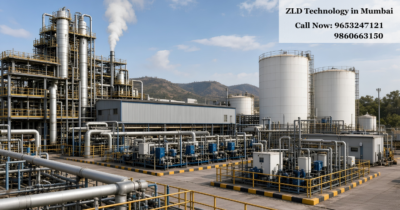
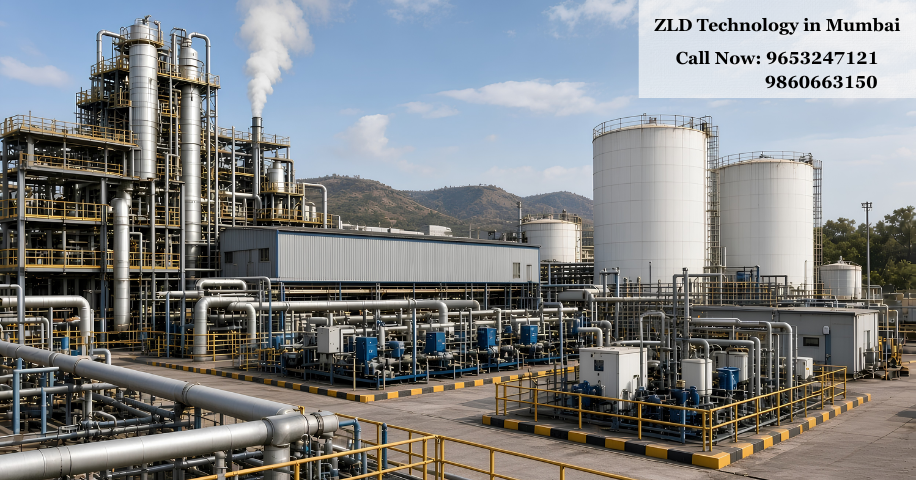
ZLD Technology in Mumbai is becoming increasingly important for industries that need to manage complex wastewater streams, reduce freshwater consumption, comply with environmental requirements, and maximize water recovery. Zero Liquid Discharge (ZLD) is an advanced wastewater treatment approach designed to recover and reuse water while minimizing or eliminating the discharge of liquid effluent from an Aquacaresee Pvt. Ltd. industrial facility.
Aquacaresee Pvt Ltd, established in 2006 and backed by 20+ years of experience, provides water and wastewater treatment solutions for industrial and institutional applications. The company specializes in the design, manufacturing, supply, installation, commissioning, maintenance, and operation of wastewater treatment systems, including customized solutions for challenging industrial effluents.
Call Now: 9653247121
Website: https://aquacaresee.com
About Aquacaresee Pvt. Ltd.
Aquacaresee Pvt Ltd, established in 2006, is a water and wastewater treatment solutions company specializing in the design, manufacturing, supply, installation, commissioning, and maintenance of advanced water and wastewater treatment systems. With 20+ years of industry experience, the company provides customized solutions designed around the technical and operational requirements of different industries.
Our capabilities include:
- Wastewater Treatment Plants (WWTP)
- Effluent Treatment Plants (ETP)
- Zero Liquid Discharge (ZLD) systems
- Industrial wastewater treatment
- Water recycling and reuse systems
- Reverse Osmosis (RO) systems
- High-TDS wastewater treatment
- Turnkey wastewater-treatment projects
- Water and wastewater consultancy
- Plant installation and commissioning
- Annual Maintenance Contracts (AMC)
- Operation & Process Maintenance (O&M)
Every wastewater-treatment project has different requirements. Therefore, our approach focuses on understanding wastewater characteristics, flow rates, treatment objectives, water-recovery requirements, available infrastructure, and operational conditions before recommending an appropriate solution.
What Is ZLD Technology?
Zero Liquid Discharge (ZLD) technology is a wastewater management process in which treated wastewater is recovered for reuse and the remaining concentrated contaminants are separated and managed as solid or semi-solid residues rather than being discharged as liquid effluent.
A typical ZLD system may combine several treatment technologies depending on the wastewater characteristics. These can include:
- Preliminary and primary wastewater treatment
- Biological treatment where applicable
- Chemical treatment
- Ultrafiltration (UF)
- Reverse Osmosis (RO)
- Multiple-effect evaporation
- Mechanical Vapor Recompression (MVR), where appropriate
- Crystallization
- Sludge or salt management
- Water recovery and reuse systems
The exact configuration is not the same for every industry. ZLD systems should be engineered according to the feed-water quality, Total Dissolved Solids (TDS), Chemical Oxygen Demand (COD), Biological Oxygen Demand (BOD), hardness, silica, chloride, sulphate, temperature, flow rate, contaminants, recovery target, and final residue characteristics.
Why Is ZLD Technology Important for Mumbai Industries?
Mumbai and the surrounding industrial regions contain a wide range of manufacturing, pharmaceutical, healthcare, hospitality, food-processing, chemical, engineering, and other commercial activities. These facilities may generate wastewater containing dissolved salts, organic matter, chemicals, suspended solids, oils, metals, or other process-specific contaminants.
Water-intensive industries can face several challenges:
- Increasing freshwater requirements
- High wastewater generation
- Difficult-to-treat industrial effluent
- Rising wastewater treatment costs
- Limited options for liquid effluent disposal
- Increasing focus on water conservation
- Need for wastewater reuse
- Pressure to improve environmental performance
- Requirement for reliable treatment plant operation
A properly designed ZLD system in Mumbai can help industries convert wastewater from a disposal challenge into a potential water-recovery resource.
How Does a ZLD System Work?
The operation of a ZLD system depends on the wastewater composition and desired recovery level. However, the overall process generally follows a sequence of treatment and concentration stages.
1. Wastewater Collection and Equalization
An equalization tank helps balance variations in wastewater flow and pollutant concentration. This can improve the stability of downstream treatment equipment.
2. Pretreatment
- Screening
- Oil and grease removal
- pH correction
- Coagulation
- Flocculation
- Clarification
- Dissolved air flotation
- Filtration
- Chemical treatment
3. Biological Treatment
Biological treatment is not automatically required for every ZLD application. Its suitability depends on the wastewater characteristics and overall treatment strategy.
4. Ultrafiltration
UF can provide suitable feed quality for downstream membrane processes in applications where membrane protection and water-quality improvement are required.
5. Reverse Osmosis
RO uses pressure to separate water from dissolved salts and other contaminants through a semi-permeable membrane.
ZLD Technology vs Conventional Wastewater Treatment
A conventional wastewater treatment plant may be designed primarily to reduce pollutants to an acceptable level before treated water is discharged or reused.
A ZLD system goes further by focusing on maximum practical water recovery and minimization or elimination of liquid effluent discharge.
| Treatment Approach | Primary Objective |
|---|---|
| Conventional wastewater treatment | Treat wastewater for compliant discharge or reuse |
| Water recycling system | Recover treated water for reuse |
| RO system | Remove dissolved contaminants and recover water |
| ZLD system | Maximize water recovery and minimize liquid discharge |
| Evaporation system | Concentrate high-TDS wastewater |
| Crystallization | Convert concentrated dissolved constituents into solids |
The appropriate solution depends on the industry’s wastewater profile, environmental requirements, water balance, economics, and operational needs.
Key Components of ZLD Technology
A ZLD plant may contain several interconnected treatment systems.
Pretreatment System
Pretreatment protects downstream equipment and improves overall process stability.
RO System
Evaporator
The evaporator further concentrates the RO reject or other high-TDS streams.
MEE System
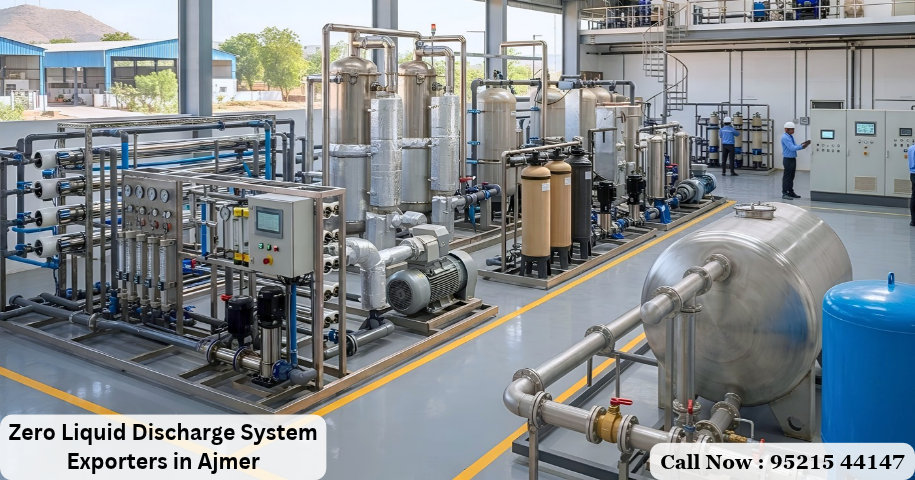
A Multiple Effect Evaporator (MEE) can be used to concentrate wastewater through multiple evaporation stages.
MVR System
Mechanical Vapor Recompression can be considered in suitable applications to improve energy efficiency by compressing and reusing vapor.
Condensate Recovery
Evaporation generates condensate that can potentially be recovered and reused after appropriate quality assessment and polishing.
ZLD Plant Design and Engineering
A successful ZLD project begins with proper engineering.
The design process may include:
- Site assessment
- Wastewater characterization
- Water balance
- Mass balance
- Treatment-process selection
- Equipment sizing
- Hydraulic design
- Membrane selection
- Evaporation system selection
- Energy assessment
- Instrumentation planning
- Automation requirements
- Layout planning
- Operation and maintenance planning
Water and mass balances are especially important because they show how wastewater moves through each stage and how much water can potentially be recovered.
Importance of Wastewater Testing Before ZLD Installation
A detailed wastewater analysis is one of the most important steps before finalizing a ZLD system.
A wastewater sample can provide information about:
- pH
- TDS
- Conductivity
- COD
- BOD
- TSS
- Hardness
- Chloride
- Sulphate
- Silica
- Alkalinity
- Oil and grease
- Metals
- Specific process contaminants
The treatment system should not be selected solely based on flow rate. Two plants with the same wastewater flow can require completely different ZLD configurations because their wastewater chemistry may be different.
ZLD Installation and Commissioning
Successful ZLD implementation does not end with equipment manufacturing.
- Equipment installation
- Piping connections
- Electrical integration
- Instrumentation
- Control-panel integration
- Utility connections
- Pump alignment
- Membrane installation
- System flushing
- Trial operation
- Performance observation
- Operator training
Commissioning helps verify whether the system operates according to the intended process design.
Experience • Expertise • Authoritativeness • Trustworthiness (E-E-A-T)
Experience
Established in 2006, Aquacaresee Pvt Ltd brings 20+ years of experience in the design, manufacturing, supply, installation, commissioning, AMC, and O&M of water and wastewater treatment systems for diverse industrial applications.
Expertise
Aquacaresee specializes in customized wastewater treatment solutions, including WWTP, ETP, ZLD systems, RO, water recycling, and high-TDS wastewater treatment, with solutions selected according to wastewater characteristics and project requirements.
Authoritativeness
With capabilities covering consultancy, turnkey project execution, equipment manufacturing, installation, commissioning, and ongoing maintenance, Aquacaresee provides end-to-end water and wastewater treatment solutions for manufacturing, healthcare, hospitality, agriculture, agro-processing, municipalities, and institutions.
Trustworthiness
Aquacaresee focuses on application-specific engineering, transparent technical evaluation, appropriate treatment-process selection, professional project execution, and long-term AMC and O&M support to help clients achieve reliable wastewater treatment and water-recovery performance.
Frequently Asked Questions (FAQs)
Q1. What is ZLD Technology in Mumbai?
Ans: ZLD Technology in Mumbai is an advanced wastewater treatment approach designed to maximize water recovery and minimize or eliminate liquid wastewater discharge from suitable industrial applications.
Q2. Which industries can use a ZLD system?
Ans: Manufacturing, pharmaceutical, healthcare, hospitality, agriculture, agro-processing, and selected municipal or institutional facilities can consider ZLD based on their wastewater characteristics and water-reuse requirements.
Q3. How does a Zero Liquid Discharge plant work?
Ans: A ZLD plant typically combines wastewater pretreatment, membrane treatment such as RO, concentration through evaporation, and crystallization or residue management to recover water and minimize liquid discharge.
Q4. Is ZLD suitable for high-TDS wastewater?
Ans: Yes, ZLD can be considered for high-TDS wastewater, particularly where conventional treatment or RO alone cannot effectively manage the concentrated reject stream, but the final process must be designed according to wastewater chemistry.
Q5. How can Aquacaresee help with ZLD projects?
Ans: Aquacaresee provides consultancy, design, manufacturing, supply, installation, commissioning, AMC, and O&M services for customized ZLD and wastewater treatment solutions based on individual project requirements.
Contact Aquacaresee Pvt Ltd
Looking for ZLD Technology in Mumbai, industrial wastewater treatment, wastewater recycling, RO reject treatment, ETP, WWTP, or a turnkey wastewater treatment solution? Contact Aquacaresee Pvt Ltd to discuss your wastewater flow, water-quality parameters, existing treatment system, water-reuse requirements, and project objectives.
- Phone:+ 91 – 96532 47121 / + 91 – 98606 63150
- Email: marketing@aquacaresee.com
- Website: www.aquacaresee.com
- Add: 8th floor office No.810, KAMDHENU 23 WEST, TTC Industrial Area, MIDC Industrial Area, Pawne, Navi Mumbai, Maharashtra 400705, Navi Mumbai, Maharashtra 400705.
- Add: Office No. 204, Aquacaresee Pvt. Ltd.; 205; and 206, Old Mumbai-Pune Hwy, opp. Hotel Silver Seven, Akurdi Gaothan, Vivek Nagar, Akurdi, Pimpri-Chinchwad, Pune, Maharashtra 411035.
- Add: Hanuman Vatika, F/1 – 56-A/3, I, opposite Golden Dags Resorts, near 200 Feet Bypass Road, Hanuman Vatika-1, Heerapura, Heerawala, Jaipur, Rajasthan 302024.
Conclusion
ZLD Technology in Mumbai provides industries with an advanced approach to wastewater management by focusing on water recovery, wastewater recycling, concentrate treatment, and minimization of liquid effluent discharge. With 20+ years of experience since its establishment in 2006, Aquacaresee Pvt Ltd develops customized water and wastewater treatment solutions based on actual wastewater characteristics, process requirements, recovery objectives, and operational conditions.
Aquacaresee supports clients through consultancy, engineering, manufacturing, supply, installation, commissioning, AMC, and O&M services, helping organizations across manufacturing, healthcare, hospitality, agriculture, agro-processing, municipalities, and other sectors address their water and wastewater treatment requirements with practical, application-specific solutions.
Call Now: 9653247121
“Don’t forget to share this post!”