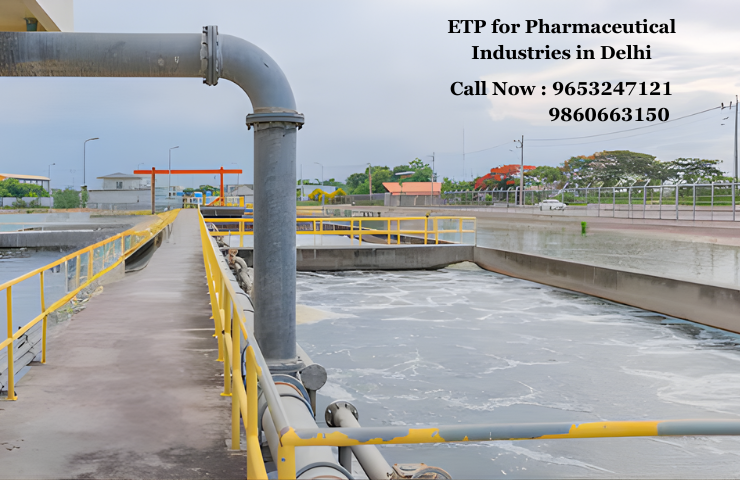
ETP for Pharmaceutical Industries in Delhi



 Enquire Now
ETP for Pharmaceutical Industries in Delhi — Advanced Effluent Treatment Solutions
Aquacaresee Pvt. Ltd., established in 2006 with over 20 years of industry experience, is a leading provider of high-performance Effluent Treatment Plants (ETP) for pharmaceutical industries. Headquartered in Pune, the company delivers end-to-end wastewater management solutions across India, including Delhi NCR. With deep technical expertise, proven execution capability, and strict adherence to environmental norms, Aquacaresee helps pharmaceutical manufacturers achieve regulatory compliance while protecting the environment.
Pharmaceutical wastewater is among the most complex industrial effluents due to high chemical load, toxic organics, antibiotics, solvents, and fluctuating pH levels. A specialized ETP is therefore essential not only to meet pollution control standards but also to ensure safe disposal, water reuse, and sustainable operations.
Call Now: 9653247121
Website: https://aquacaresee.com
Aquacaresee’s Expertise in Pharmaceutical ETP Design
Aquacaresee Pvt. Ltd. designs customized treatment plants tailored to the specific effluent profile of each pharmaceutical unit. Their engineering team conducts detailed wastewater analysis before proposing a solution.
Key Design Principles
- Process-specific treatment configuration
- Scalability for future expansion
- Energy-efficient operation
- Automation for consistent performance
- Minimal sludge generation
- Compliance with CPCB & SPCB norms
- Option for Zero Liquid Discharge (ZLD)
Why Pharmaceutical Industries in Delhi Need Advanced ETP Systems
Delhi and the NCR region host a large concentration of pharmaceutical manufacturing units, research labs, formulation plants, and bulk drug facilities. These operations generate effluent containing:
- Active pharmaceutical ingredients (APIs)
- Antibiotics and hormones
- Solvents and organic compounds
- Heavy metals
- High COD & BOD levels
- Suspended solids
- Toxic and bio-resistant substances
Untreated discharge can severely contaminate groundwater and surface water, posing risks to public health and ecosystems. Regulatory authorities mandate strict treatment before discharge or reuse.
An efficient ETP ensures:
- Compliance with pollution control norms
- Safe disposal of hazardous effluents
- Reduction of environmental impact
- Possibility of water recycling
- Corporate sustainability compliance
- Protection from legal penalties
What Makes Pharmaceutical Effluent So Challenging?
Unlike domestic sewage, pharmaceutical wastewater varies significantly in composition depending on production batches. It may contain:
1. High Chemical Oxygen Demand (COD)
Pharma effluents often exceed permissible COD limits due to complex organic compounds.
2. Toxic & Non-Biodegradable Compounds
Antibiotics and synthetic chemicals resist biological degradation.
3. Variable pH Levels
Discharges can range from highly acidic to strongly alkaline.
4. Suspended & Dissolved Solids
Fine particles, salts, and precipitates require multi-stage treatment.
5. Presence of Solvents & Heavy Metals
Requires specialized removal processes.
Because of these complexities, pharmaceutical ETP systems must combine physical, chemical, and biological treatment technologies.
Complete Treatment Process for Pharmaceutical ETP
1. Preliminary Treatment
This stage removes large particles and prepares wastewater for further processing.
Components include:
- Bar screens — Remove plastics, debris, packaging residue
- Oil & grease traps — Separate floating contaminants
- Equalization tank — Balances flow and pollutant load
- pH correction system — Neutralizes acidic or alkaline wastewater
2. Primary Treatment
Focuses on removing suspended solids and reducing pollutant load through physical and chemical processes.
Typical units:
- Coagulation & flocculation tanks
- Chemical dosing systems
- Primary clarifier
- Sludge collection mechanisms
Chemicals help aggregate fine particles into larger flocs that settle easily.
3. Secondary (Biological) Treatment
Biological treatment breaks down organic pollutants using microorganisms.
Common technologies used:
- Activated sludge process
- Moving Bed Biofilm Reactor (MBBR)
- Sequential Batch Reactor (SBR)
- Membrane Bioreactor (MBR)
For pharmaceutical effluent, advanced biological systems like MBBR or MBR are often preferred due to high efficiency and compact footprint.
4. Tertiary Treatment
Ensures final polishing of treated water to meet discharge or reuse standards.
Includes:
- Pressure sand filtration
- Activated carbon filtration
- Advanced oxidation processes
- UV or chlorination disinfection
- Reverse Osmosis (optional for reuse)
5. Sludge Treatment & Disposal
Pharmaceutical ETPs generate hazardous sludge that must be handled safely.
Aquacaresee provides:
- Sludge thickening
- Filter press systems
- Drying beds
- Safe disposal guidance
Turnkey ETP Solutions for Pharmaceutical Companies
Aquacaresee offers comprehensive turnkey services, eliminating the need for multiple vendors.
Scope of Services
- Design & engineering
- Manufacturing of equipment
- Supply & transportation
- Civil & mechanical installation
- Electrical & automation work
- Commissioning & performance testing
- Operator training
- Documentation for regulatory approval
Advanced Technologies Used
Membrane Bioreactor (MBR)
- Produces high-quality effluent
- Compact footprint
- Suitable for water reuse
- Removes fine suspended solids
Moving Bed Biofilm Reactor (MBBR)
- Highly stable process
- Handles shock loads
- Low maintenance
- Efficient for high COD removal
Zero Liquid Discharge (ZLD)
For pharma industries aiming for complete water recovery:
- Multi-effect evaporators
- Crystallizers
- RO systems
- Condensate polishing
Benefits of Installing a Pharmaceutical ETP
Environmental Protection
Prevents contamination of soil, rivers, and groundwater.
Regulatory Compliance
Meets pollution control board standards.
Water Conservation
Allows reuse for cooling, gardening, or process use.
Cost Savings
Reduces freshwater consumption and disposal costs.
Corporate Sustainability
Enhances ESG performance and brand reputation.
Why Choose Aquacaresee for ETP in Delhi?
20+ Years of Experience
Proven track record across industries.
Customized Engineering
Every plant designed based on actual effluent characteristics.
High-Quality Manufacturing
Robust equipment ensures long service life.
Skilled Technical Team
Experts in chemical, biological, and membrane technologies.
PAN-India Execution Capability
Reliable support for Delhi NCR projects.
Post-Installation Support
Comprehensive maintenance services.
Operation & Maintenance (O&M) Services
Efficient operation is crucial for consistent performance. Aquacaresee provides:
- Skilled operators
- Regular monitoring & testing
- Preventive maintenance
- Chemical management
- Troubleshooting support
- Performance optimization
Industries Served Beyond Pharmaceuticals
Although specialized in pharma ETPs, Aquacaresee supports multiple sectors in Delhi:
- Manufacturing industries
- Healthcare facilities & hospitals
- Hospitality sector (hotels & resorts)
- Food processing units
- Chemical industries
- Agriculture & agro-processing
- Municipal wastewater projects
Frequently Asked Questions (FAQs) — ETP for Pharmaceutical Industries in Delhi
Q1. What is an Effluent Treatment Plant (ETP) for pharmaceutical industries?
Ans: An ETP is a specialized system designed to treat wastewater generated during pharmaceutical manufacturing. It removes chemicals, toxic compounds, organic matter, and suspended solids to make the water safe for discharge or reuse.
Q2. Is an ETP mandatory for pharma units in Delhi?
Ans: Yes. Pharmaceutical industries must comply with pollution control regulations before discharging wastewater. Installing a properly designed ETP is essential to meet environmental norms and avoid penalties.
Q3. Can treated water from a pharmaceutical ETP be reused?
Ans: Yes. With advanced tertiary treatment or Zero Liquid Discharge (ZLD) systems, treated water can be reused for cooling, gardening, flushing, or even process applications, reducing freshwater consumption.
Q4. How much space is required for a pharmaceutical ETP?
Ans: Space requirements depend on plant capacity, treatment technology, and discharge standards. Modern compact technologies like MBR or MBBR allow installation even in limited industrial spaces.
Q5. Does Aquacaresee provide installation and maintenance services in Delhi?
Ans: Yes. Aquacaresee Pvt. Ltd., based in Pune, offers complete turnkey solutions including design, manufacturing, installation, commissioning, AMC, and Operation & Maintenance services across Delhi NCR.
Contact Aquacaresee Pvt Ltd Today
Our expert team helps industries, hospitals, hotels, and municipalities manage wastewater effectively.
- Phone:+ 91 – 96532 47121 / + 91 – 98606 63150
- Email: marketing@aquacaresee.com
- Website: www.aquacaresee.com
Conclusion
Effluent management is a critical responsibility for pharmaceutical industries, especially in highly regulated regions like Delhi NCR. Untreated pharmaceutical wastewater can cause severe environmental damage, legal complications, and operational risks. Installing a technologically advanced Effluent Treatment Plant is therefore not just a compliance requirement but a strategic investment in sustainability and business continuity.
Aquacaresee Pvt. Ltd., with over two decades of experience, delivers customized ETP solutions tailored specifically for pharmaceutical wastewater challenges. From detailed wastewater analysis and process design to turnkey execution and long-term maintenance, the company ensures reliable performance, regulatory compliance, and cost-effective operation.
By choosing a trusted and experienced partner, pharmaceutical manufacturers can focus on production while maintaining environmental responsibility. A well-designed ETP protects natural resources, enhances corporate reputation, enables water reuse, and prepares industries for future environmental regulations.
Call Now: 9653247121
Visit: https://aquacaresee.com
“Don’t forget to share this post!”