
Blog
Zero Liquid Discharge Plant (ZLD) in Baran

 +91 9521544147

 Enquire Now
 Whatsapp Inquiry
ZLD Plant Manufacturers in Baran | Aquacaresee Pvt. Ltd.
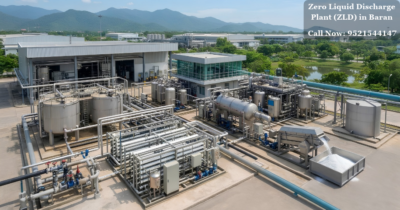
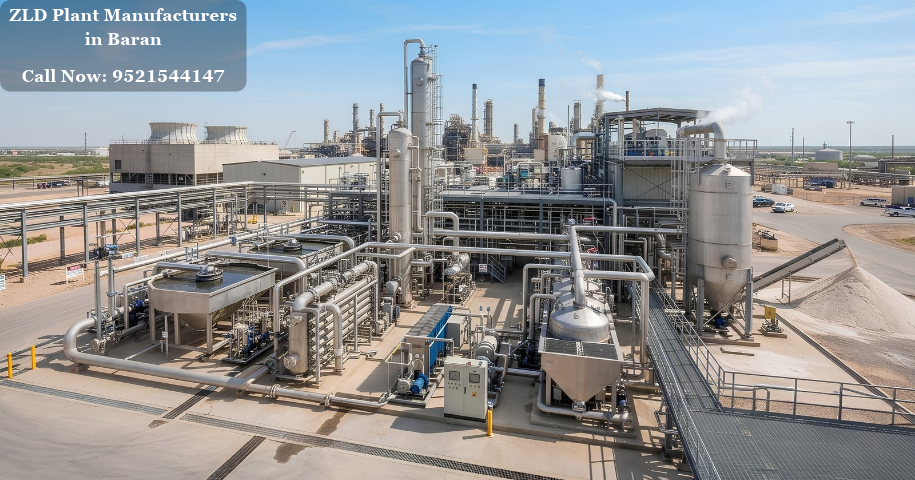
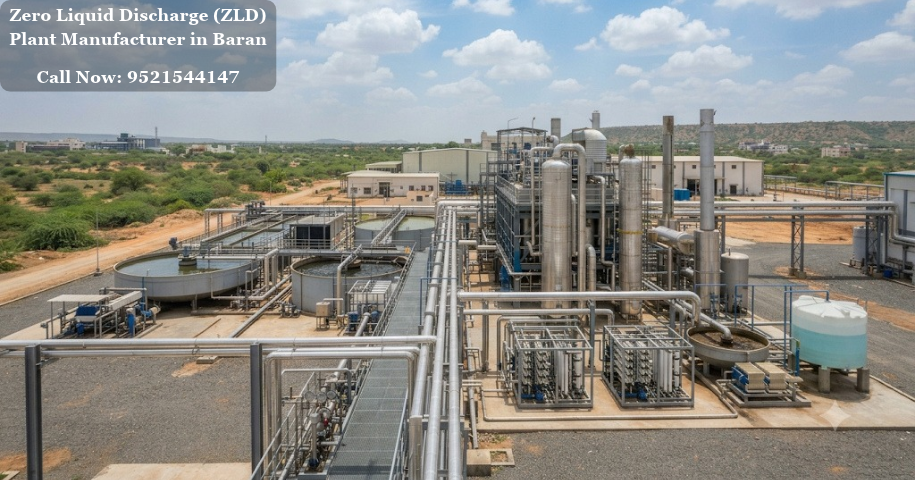
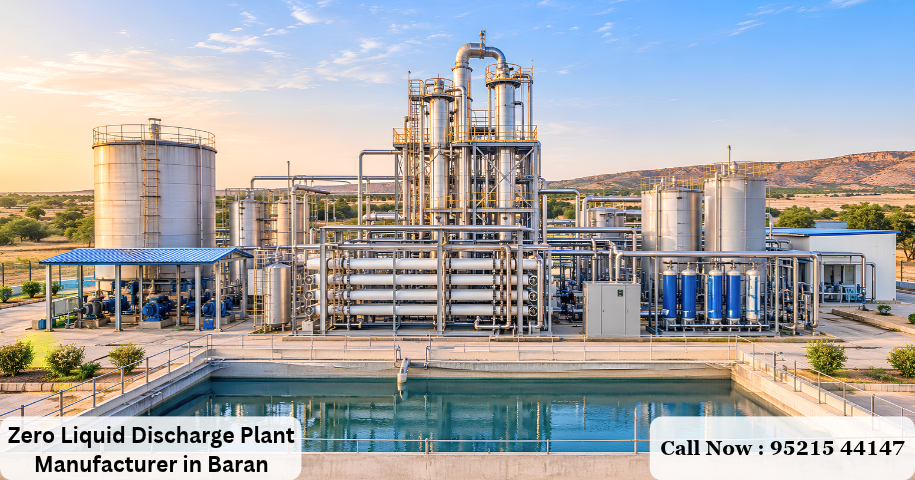
Industrial units around Baran release process effluent that carries salts, dissolved solids, and organic matter, and letting it out untreated harms land and water. The answer many factories now choose is zero liquid discharge, where nearly all wastewater is recovered and reused. Choosing among the ZLD Plant Manufacturers in Baran is therefore a major step for any unit planning to cut its discharge.
Our team at Aquacaresee Pvt. Ltd. has worked on water, sewage, and effluent systems since 2006, covering design, fabrication, installation, and servicing. Each ZLD project starts by studying effluent flow, salinity, hardness, and the water quality a factory wants to reuse. That groundwork keeps every system practical, efficient, and fitted to the plant it serves.
When a factory is ready to move forward, a short technical conversation usually settles the scope, the capacity, and the likely process route. Share your effluent details and production pattern through our enquiry page, and our engineers will respond with sensible next steps for your site.
Call Now: 95215 44147
Website: https://aquacaresee.com
About Us
Industries across the region have relied on Aquacaresee Pvt. Ltd. since 2006 for effluent and recycling solutions, and we work as one of the dependable ZLD plant manufacturers in Baran for factories seeking lower discharge. Our engineers test the effluent first and shape the system around what the site actually produces.
- Years of hands-on practice: Working with industrial effluent, sewage, and water recovery projects since 2006.
- Single-point responsibility: Process design, fabrication, erection, and start-up handled by one accountable team.
- Technology chosen per site: ETP, STP, RO, evaporator, and ZLD configurations selected to suit each factory.
- Support after handover: Operator training, AMC plans, and troubleshooting once the plant is running.
- Design rooted in data: Effluent analysis, daily volume, and reuse goals drive every layout decision.
Our offices in Navi Mumbai, Pune, and Jaipur put engineers within reach of clients across Rajasthan. Watch our project videos to see finished installations, or reach out through the contact page to discuss your requirement.
How Salty Effluent Becomes Clean, Reusable Water
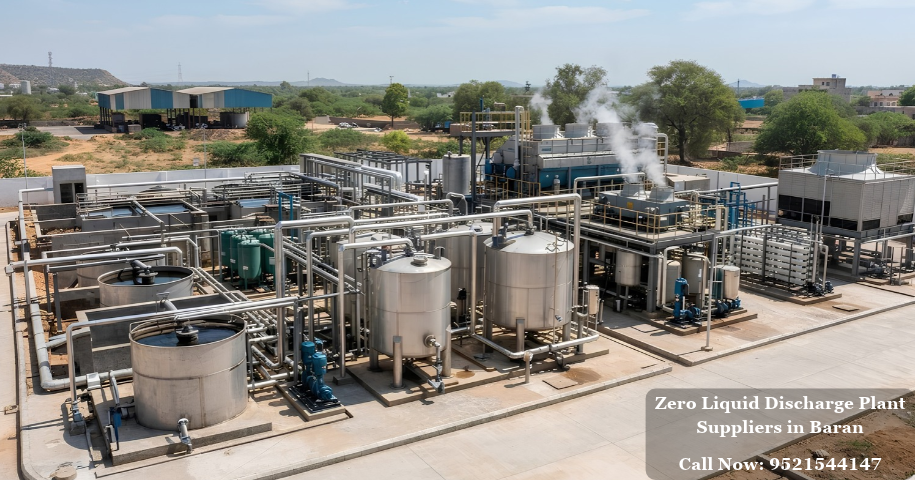
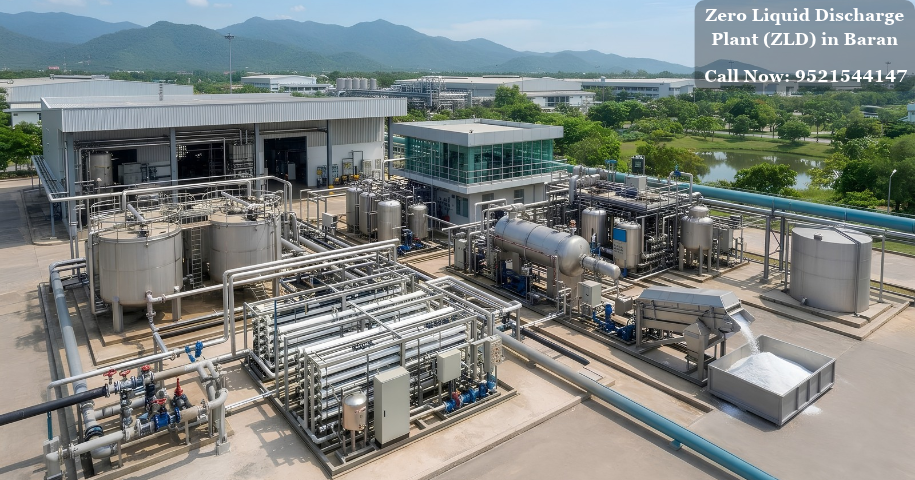
A ZLD system sends factory effluent through staged treatment so that dissolved salts, organics, and suspended solids are separated step by step. Water is recovered at each stage and returned to the process, while what remains is concentrated into a small, manageable residue.
The goal is simple: keep liquid waste from leaving the factory boundary, meet pollution-control expectations, and give the unit a steady supply of recycled process water.
A common ZLD process chain runs as follows:
- Primary effluent treatment: Screening, equalisation, and clarification remove coarse solids and even out flow.
- Biological stage: Microbes break down organic load so BOD and COD fall before membranes take over.
- Reverse osmosis recovery: Membranes pull clean permeate from the stream and leave a concentrated reject.
- Evaporation: Multiple-effect or similar evaporators boil off the reject and capture the condensate for reuse.
- Crystallisation and solids handling: Remaining salts are dried into a solid residue for authorised disposal.
The final arrangement depends on effluent chemistry, daily volume, available land, and how much water the factory wants back. That is why every ZLD plant we build follows a site study and an effluent analysis rather than a ready-made catalogue design.
Why Water Recovery Pays Off for Factories in Water-Scarce Baran
Where fresh water is limited, a recovery system turns a recurring disposal headache into a usable supply. The gains show up quickly, as the points below explain.
1. Recycled Water for Core Process Needs
Recovered condensate and permeate can go back to cooling towers, boilers, washing lines, and other utilities, so far less raw water is drawn in.
2. Confidence in Meeting Pollution Control Norms
Because liquid effluent is not released outside, a unit has a far easier time satisfying the discharge conditions placed on it by regulators.
3. Protection for Soil, Groundwater, and Neighbours
Keeping saline and chemical effluent inside a closed loop lowers the risk of ground contamination, although the solid residue still has to be disposed of through authorised channels.
4. Lower Intake Costs and Better Process Control
Reusing recovered water trims spending on tankers and borewell supply, and regular monitoring helps teams spot membrane or evaporator issues early.
Questions to Settle Before Appointing a ZLD Manufacturer
Before shortlisting any ZLD plant manufacturer in Baran, look past the headline price and weigh process suitability, build quality, commissioning support, and how quickly engineers can reach your factory.
Effluent Characterisation Before Any Design
A capable manufacturer asks for TDS, COD, hardness, and flow figures, and often wants lab samples, before it proposes any system.
A Single Contract From Concept to Commissioning
Look for one team that covers engineering, fabrication, erection, start-up, consultancy, AMC, and O&M, so responsibility never gets passed between vendors.
Process Selection That Respects Your Effluent
Depending on salinity and load, the right train may combine pre-treatment, RO, MEE or ATFD evaporation, and a crystalliser.
Service Backup That Protects Uptime
Planned visits, preventive servicing, spare membranes, and quick technical response keep the plant running and the recovered water within target quality.
Industries Where Zero Liquid Discharge Makes the Biggest Difference
Aquacaresee engineers recovery systems for several types of factories, sized to the effluent character, daily volume, and the way the reclaimed water will be reused.
1. Textile Dyeing and Processing Units
Dyeing lines release coloured, salt-heavy wastewater, which suits RO and evaporation stages that return clean water to the wash house.
2. Pharmaceutical and Chemical Manufacturers
Process-heavy plants with complex effluent benefit from multi-stage recovery that handles high COD and dissolved solids reliably.
3. Food, Dairy, and Beverage Processors
Washing and cleaning cycles create organic-rich effluent that can be treated biologically and polished for reuse in utilities.
4. Power, Steel, and Metal Finishing Units
Cooling-tower blowdown and pickling or plating rinse water carry dissolved salts and metals that a ZLD loop can contain and recover.
5. Paper, Packaging, and Allied Manufacturing
Mills with heavy water use can close their loop on site, lowering fresh-water demand and keeping liquid waste inside the plant.
Reasons Baran Factories Work with Aquacaresee on Water Recovery
A ZLD installation stays in service for many years, so the manufacturer behind it matters as much as the equipment. Look at engineering depth, process fit, response time, and the support offered after handover.
Here is what working with our team looks like:
- Experience dating to 2006: Long involvement in water, sewage, and effluent treatment, as stated by the company.
- End-to-end ownership: Design, fabrication, supply, erection, commissioning, consultancy, AMC, and O&M under one roof.
- Wide technology range: Multiple process options so every factory gets a fitting solution.
- Straight technical advice: Frank discussion of options, backed by your own effluent data.
- Long-term association: Guidance from the first planning meeting through everyday operation.
On every project, verify the process flow, expected recovery rate, operating cost, and service terms. Ask for a written proposal that lists the design basis, performance expectations, exclusions, and utility needs before you confirm an order with any ZLD plant manufacturer in Baran.
What Shapes the Investment in a ZLD System
Flow rate alone does not set the price. Two factories with the same output can need very different equipment once effluent chemistry and recovery targets are factored in.
Main factors that move the budget:
- Daily effluent quantity: Sets the capacity every stage of the plant must handle.
- Salinity and TDS level: Higher dissolved solids call for heavier evaporation and crystallisation duty.
- Target recovery rate: Pushing closer to full recovery adds equipment and energy use.
- Technology combination: RO, MEE, ATFD, and crystalliser choices differ in footprint and running cost.
- Site and civil conditions: Land, piping, power supply, and steam availability influence spending.
- Operating expenses: Energy, chemicals, labour, membranes, spares, and salt disposal shape lifetime cost.
For a dependable quotation, share your daily effluent volume, lab analysis, current treatment units, desired water recovery, and the land and utilities available for the plant.
E-E-A-T (Experience, Expertise, Authoritativeness, Trustworthiness)
Experience
Since 2006, Aquacaresee has delivered industrial effluent, sewage, and water recovery solutions for factories, businesses, and institutions.
Expertise
Our engineers customize each ZLD system using pre-treatment, RO, evaporation, and crystallisation based on effluent quality, volume, and water recovery needs.
Authoritativeness
Aquacaresee provides customised equipment, installation, commissioning, and maintenance, with offices in Navi Mumbai, Pune, and Jaipur for reliable regional support.
Trustworthiness
We provide written proposals detailing plant capacity, water recovery, operating costs, and service terms before order confirmation.
Frequently Asked Questions (FAQs)
Q1. What does a ZLD plant actually do for a factory?
Ans: It recovers almost all the water from process effluent and returns it for reuse, leaving only a small solid residue. This means no liquid waste leaves the factory, which supports compliance and reduces dependence on fresh water.
Q2. How do I judge a ZLD manufacturer before signing?
Ans: Check their process design record, fabrication standards, commissioning skill, and after-sales response. Aquacaresee Pvt. Ltd., working since 2006, welcomes a detailed discussion of your Baran requirement.
Q3. Where can the recovered water be used?
Ans: Properly treated condensate and permeate typically return to cooling towers, boilers, washing, and other utility duties, but it is not intended for drinking.
Q4. Which stages make up a typical ZLD system?
Ans: Most systems combine pre-treatment, biological treatment, reverse osmosis, evaporation, and crystallisation, with additional units added when effluent chemistry demands them.
Q5. Why do quotations differ for similar factories?
Ans: Effluent volume, TDS, COD, recovery target, chosen technology, land, utilities, and operating needs vary from unit to unit. A site visit and lab analysis give the most reliable estimate.
Contact Us
- Phone:+ 91 – 95215 44147
- Email: marketing@aquacaresee.com
- Website: www.aquacaresee.com
- Add: 8th floor office No.810, KAMDHENU 23 WEST, TTC Industrial Area, MIDC Industrial Area, Pawne, Navi Mumbai, Maharashtra 400705, Navi Mumbai, Maharashtra 400705.
- Add: Office No. 204, Aquacaresee Pvt. Ltd.; 205; and 206, Old Mumbai-Pune Hwy, opp. Hotel Silver Seven, Akurdi Gaothan, Vivek Nagar, Akurdi, Pimpri-Chinchwad, Pune, Maharashtra 411035.
- Add: Hanuman Vatika, F/1 – 56-A/3, I, opposite Golden Dags Resorts, near 200 Feet Bypass Road, Hanuman Vatika-1, Heerapura, Heerawala, Jaipur, Rajasthan 302024.
Conclusion
Partnering with a capable ZLD plant manufacturer in Baran lets your factory cut liquid discharge, meet pollution-control expectations, and reuse more water. A system designed around real effluent data keeps waste inside the plant and returns reusable water to your operations.
Founded in 2006, Aquacaresee Pvt. Ltd. delivers effluent and ZLD systems with installation, commissioning, AMC, and O&M support shaped around each client’s goals. To start planning, talk to our engineering team about your site, and read more about the process on Wikipedia.
Call Now: 9521544147
“Don’t forget to share this post!”