

Blog
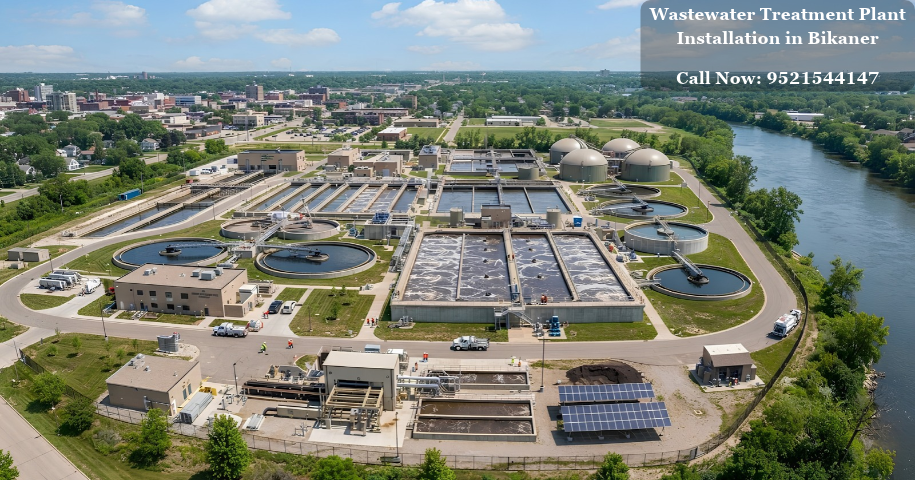
Wastewater Treatment Plant Installation in Bikaner

 95215 44147

 Enquire Now
Wastewater Treatment Plant Installation in Bikaner | Aquacaresee Pvt. Ltd.
Water is a precious resource in Rajasthan’s dry climate, and every factory in Bikaner that uses it also produces effluent that needs careful handling. A well-planned Wastewater Treatment Plant Installation in Bikaner converts that effluent into properly treated water that can be reused or released responsibly.
Installation is far more than placing tanks and pumps on a plot of land. It covers effluent study, process design, civil construction, equipment erection, piping, electrical wiring, and a careful commissioning phase before the plant takes its full load.
Aquacaresee Pvt. Ltd. handles each of these stages under a single roof, as explained in our company profile. Our engineers plan every plant around the real conditions at your site, so the system performs steadily from its very first day.
Call Now: 95215 44147
Website: https://aquacaresee.com
About Us
Aquacaresee Pvt. Ltd. began its journey in 2006 and has since spent more than two decades building water and wastewater systems for factories, institutions, and commercial sites. We take care of design, fabrication, supply, installation, commissioning, and upkeep, so clients deal with one accountable team instead of many separate vendors.
- Effluent Treatment Plants (ETP) and Sewage Treatment Plants (STP) sized to your actual load
- Water Treatment Plants (WTP) and Reverse Osmosis (RO) systems for process and utility water
- Zero Liquid Discharge (ZLD) and recycling systems for water-stressed industries
- Turnkey projects, technical consultancy, AMC, and Operation & Maintenance (O&M) support
You can follow our latest work on Facebook and see plants taking shape on Instagram. Whether you need a new plant or a reliable wastewater treatment plant installation upgrade, we tailor each job to your effluent and your budget.
Core Building Blocks of an Effective Effluent Treatment Plant
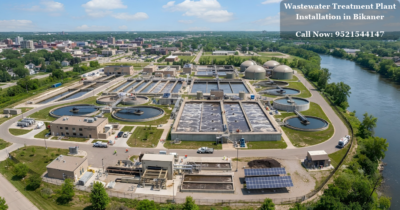
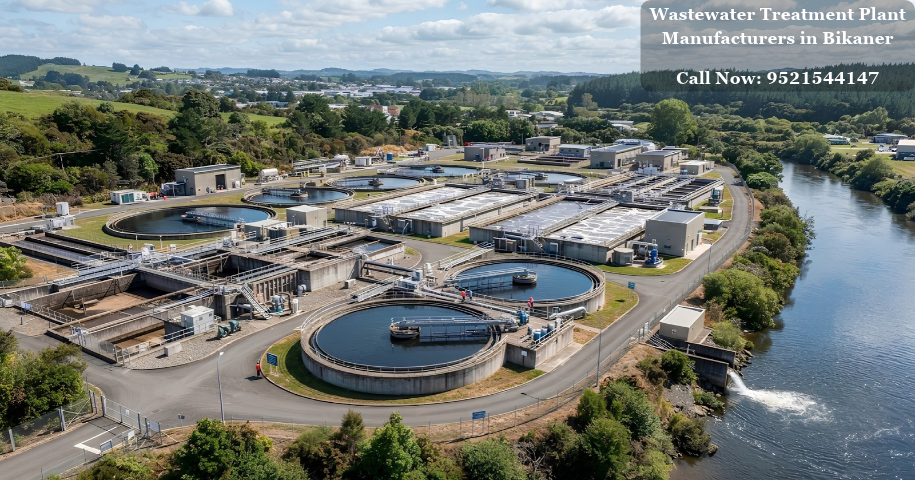
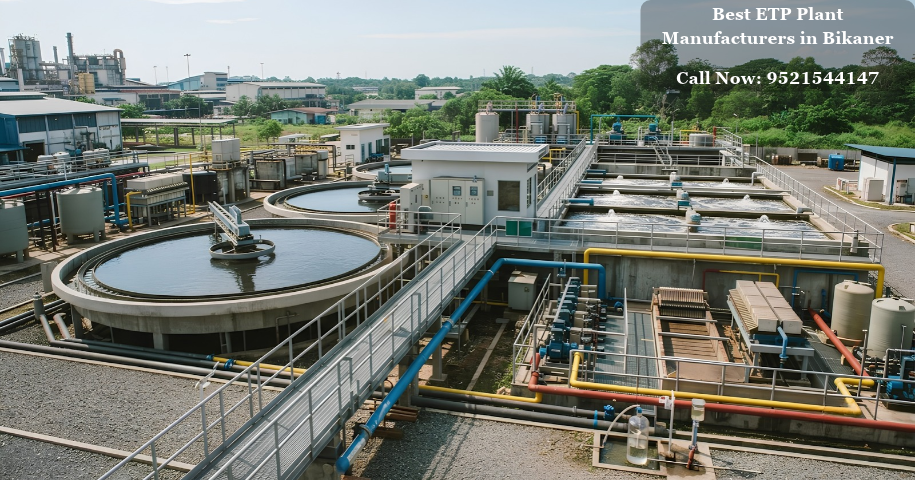
A wastewater treatment plant is a series of connected stages, each built to remove one particular kind of pollutant from used water. By the time the water leaves the final stage, it should meet the quality needed for reuse or disposal.
Most installations are built around these units:
- Bar screens and grit chambers
- Oil and grease trap
- Equalisation tank with aeration
- Coagulation and flocculation dosing
- Primary clarifier
- Aerobic or anaerobic biological reactor
- Secondary clarifier
- Pressure sand and activated carbon filters
- Sludge dewatering and disposal system
No two plants are identical. The final layout depends on where the effluent comes from, how strong the pollution is, the daily flow, the space available, and the quality of treated water the client needs.
Anyone planning a Wastewater Treatment Plant Installation in Bikaner should therefore view the plant as an engineered system rather than a single machine. Sizing, process selection, and layout must all follow laboratory results from the actual effluent.
Reasons Bikaner Businesses Are Investing in Effluent Treatment
Bikaner lies in a dry part of Rajasthan where groundwater is limited. Food processors, textile units, dairies, and other manufacturers still need steady water for production and cleaning, and they generate effluent in return. Treating that effluent on site has become a practical business decision.
1. Stretching Limited Water Supplies
Treated water can be fed back into suitable non-process uses, which lowers the volume drawn from borewells or tankers. For plants in arid areas, this single benefit often justifies the whole project.
2. Meeting Pollution Control Expectations
Industrial units must satisfy the consent conditions set by the Rajasthan State Pollution Control Board. A properly designed plant helps keep treated water within the prescribed limits for parameters such as BOD, COD, and suspended solids.
3. Protecting Soil and Groundwater
Untreated effluent that seeps into the ground can harm soil quality and contaminate nearby water sources. Treatment removes the harmful load before it can travel beyond the factory boundary.
4. Cutting Tanker and Freshwater Costs
Reclaimed water can often serve purposes such as:
- Cooling tower makeup.
- Washing of vehicles and equipment.
- Floor and yard cleaning.
- Green belt and garden irrigation.
- Toilet flushing in plant buildings.
- Selected process uses after further polishing.
5. Supporting Long-Term Business Growth
Buyers, auditors, and lenders increasingly look at a company’s environmental practices. A working treatment plant signals responsible management and can make future expansion approvals easier to obtain.
Step-by-Step Journey from Site Survey to Handover
Our installation work follows a fixed sequence, so that nothing is missed between the drawing board and the first batch of treated water.
1. Site Visit and Effluent Sampling
Engineers visit the premises, measure the flow, and collect samples for laboratory analysis. These results guide every design choice that follows.
2. Process Design and Layout Planning
Using the test data, we select the treatment stages, size the tanks, and prepare layout and piping drawings that fit the available plot.
3. Civil Construction and Tank Preparation
Foundations, collection pits, and treatment tanks are built or placed as per the approved drawings, with careful attention to leak-proofing and safe access.
4. Equipment Erection and Electrical Work
Pumps, blowers, dosing units, filters, and control panels are mounted and connected, followed by cable laying and instrumentation.
5. Trial Runs and Commissioning
The plant is run on real effluent, settings are fine-tuned, and operators receive training. Treated water is tested once more before the system is handed over.
Treatment Technologies We Install for Bikaner Industries
The choice of technology decides how well a Wastewater Treatment Plant Installation in Bikaner performs over the years. Every industry produces a different effluent, so the process must match the pollutants present and the water quality required at the end.
1. Moving Bed Biofilm Reactor (MBBR)
MBBR uses small plastic carriers that hold a film of helpful microbes inside an aerated tank. These microbes break down organic matter efficiently while the reactor stays compact.
Key advantages:
- Compact tank size for the capacity handled.
- Copes well with changes in organic load.
- Simple operation, usually without sludge return.
- Easy to expand by adding more carriers.
2. Sequencing Batch Reactor (SBR)
SBR carries out aeration, settling, and decanting in a single tank through timed cycles. This suits sites that have variable flow and limited space.
Key advantages:
- Single-tank operation saves land.
- Automatic cycle control reduces manual effort.
- Can support nitrogen removal when properly designed.
- Delivers consistent treated water quality.
3. Dissolved Air Flotation (DAF)
DAF units release fine air bubbles that lift oil, grease, and light solids to the surface for easy removal. They are widely used for food and dairy effluent.
Key advantages:
- Effective on fats, oils, and grease.
- Lightens the load on later biological stages.
- Quick start-up and fast response.
- Works well alongside chemical coagulation.
4. Membrane Bioreactor (MBR)
MBR combines biological treatment with membrane filtration to produce high-quality treated water in a small footprint. It is a popular choice where space is tight and reuse is a priority.
Key advantages:
- Produces very clear treated water.
- Needs far less land than conventional layouts.
- Suitable for water reuse projects.
- Can lower sludge generation when operated correctly.
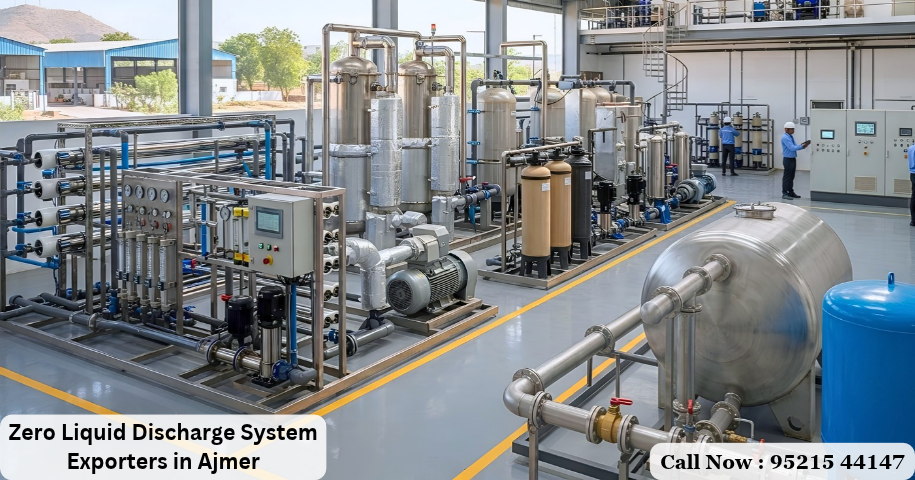
5. Ultrafiltration and Reverse Osmosis Polishing
For clients who want to reuse water in more sensitive applications, ultrafiltration and reverse osmosis remove fine particles and dissolved salts after biological treatment is complete.
Key advantages:
- Recovers high-quality reusable water.
- Cuts down dissolved salt content.
- Supports zero-liquid-discharge goals.
- Protects downstream equipment from fouling.
Advantages of Setting Up a Treatment Plant at Your Bikaner Facility
A properly engineered plant rewards a business in several practical ways.
1. Dependable Compliance Support
A plant matched to your effluent makes it far easier to stay within discharge and reuse norms. Approval still depends on how the commissioned system actually performs.
2. Lower Dependence on Fresh Water
Reusing treated water for cleaning, cooling, and landscaping trims the amount of fresh water your facility must buy or extract every day.
3. Cleaner Surroundings and Safer Workplaces
Controlled collection and treatment keep standing effluent, odour, and stagnant pools away from work areas, which makes the premises healthier for staff and neighbours.
4. Predictable Operating Costs
With defined chemical dosing, power use, and maintenance schedules, you can budget the plant’s running costs with far greater confidence.
5. Clear Visibility into Plant Performance
Flow meters, level sensors, and control panels let operators track water use and treatment quality, so small problems are spotted before they grow.
Preparations to Make Before You Begin Installation
Every industrial unit has different obligations, so a little preparation saves a great deal of time later.
Before placing an order, businesses should:
- Read the consent to operate conditions carefully.
- Measure the daily and peak effluent flow.
- Get the effluent tested at a reliable laboratory.
- Mark out the plot area for tanks and equipment.
- Decide the quality of treated water you want.
- Plan how sludge will be handled and disposed of.
Good preparation helps the installer propose a plant that truly fits your needs. Final regulatory approval, however, rests on how the commissioned plant performs against the prescribed norms.
ms.
E-E-A-T (Experience, Expertise, Authoritativeness, Trustworthiness)
Experience
Since 2006, our team has installed and maintained treatment plants for industries and institutions. This two-decade track record shows in the practical decisions we make on every site, from tank placement to operator training.
Expertise
Our engineers work across ETP, STP, WTP, RO, and ZLD technologies, applying well-established water treatment fundamentals to each design. They size every unit from laboratory data and choose processes that suit the effluent rather than forcing one layout on every client.
Authoritativeness
Clients rely on us for turnkey execution, technical consultancy, and long-term service across many sectors. You can watch our work in action on the Aquacaresee YouTube channel and see how real projects are delivered.
Trustworthiness
We prepare clear scopes, follow quality checks during fabrication and erection, and stay available after handover through AMC and O&M services. Our support team and Jaipur office keep us within reach of Rajasthan projects.
Frequently Asked Questions (FAQs)
Q1. What does wastewater treatment plant installation involve for a factory in Bikaner?
Ans: It covers an effluent study, process design, civil works, equipment erection, piping, electrical connections, trial runs, and operator training. Each step is planned around your effluent quality, daily flow, and the space available at your site.
Q2. How long does it take to install a treatment plant?
Ans: The timeline depends on plant capacity, the amount of civil construction, and equipment lead time. A realistic schedule is confirmed only after the site survey and design are finalised.
Q3. Which businesses in Bikaner need an effluent treatment plant?
Ans: Food processing units, dairies, textile and dyeing units, chemical manufacturers, and other water-using industries usually need one. Hotels, hospitals, and institutions often require sewage treatment plants as well.
Q4. Will the plant need a large amount of space?
Ans: That depends on the technology chosen. Compact options such as MBBR and MBR need much less land than conventional systems, which helps when your plot is limited.
Q5. Do you provide support after the plant is commissioned?
Ans: Yes. We offer Annual Maintenance Contracts and Operation & Maintenance services, so trained technicians can keep the plant running smoothly and handle routine servicing.
Contact Us
- Phone:+ 91 – 95215 44147
- Email: marketing@aquacaresee.com
- Website: www.aquacaresee.com
- Add: 8th floor office No.810, KAMDHENU 23 WEST, TTC Industrial Area, MIDC Industrial Area, Pawne, Navi Mumbai, Maharashtra 400705, Navi Mumbai, Maharashtra 400705.
- Add: Office No. 204, Aquacaresee Pvt. Ltd.; 205; and 206, Old Mumbai-Pune Hwy, opp. Hotel Silver Seven, Akurdi Gaothan, Vivek Nagar, Akurdi, Pimpri-Chinchwad, Pune, Maharashtra 411035.
- Add: Hanuman Vatika, F/1 – 56-A/3, I, opposite Golden Dags Resorts, near 200 Feet Bypass Road, Hanuman Vatika-1, Heerapura, Heerawala, Jaipur, Rajasthan 302024.
Conclusion
A carefully planned professional Wastewater Treatment Plant Installation in Bikaner helps factories save water, stay within pollution norms, and protect local land and groundwater. Success depends on accurate effluent data, the right technology mix, sound construction, and trained operators. When these pieces fit together, the plant runs smoothly for many years.
Aquacaresee Pvt. Ltd. brings more than 20 years of hands-on experience to every project, from the first site visit to long-term upkeep. To discuss your plant requirements, request a consultation today and let our engineers suggest the most suitable solution for your facility.
Call Now: 9521544147
“Don’t forget to share this post!”